
Cheapest with wine
1.5 hours·English
4.9(1,473)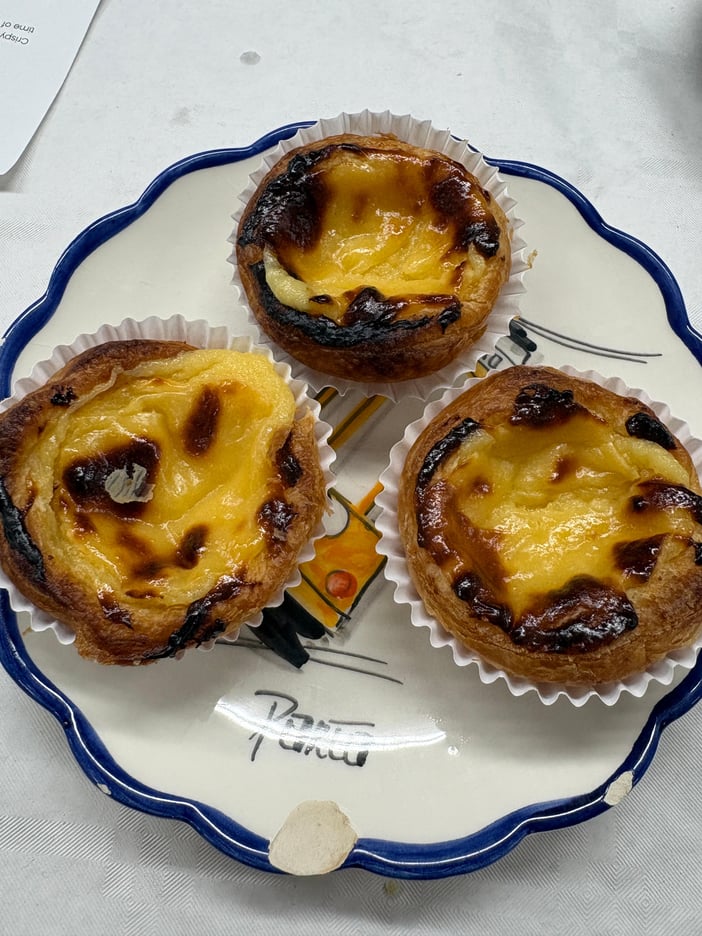
Porto: Pastel de Nata Cooking Class with Port Wine
Free cancellationPaper box to take the pastries homeExclusive recipe for the tarts and puff pastry
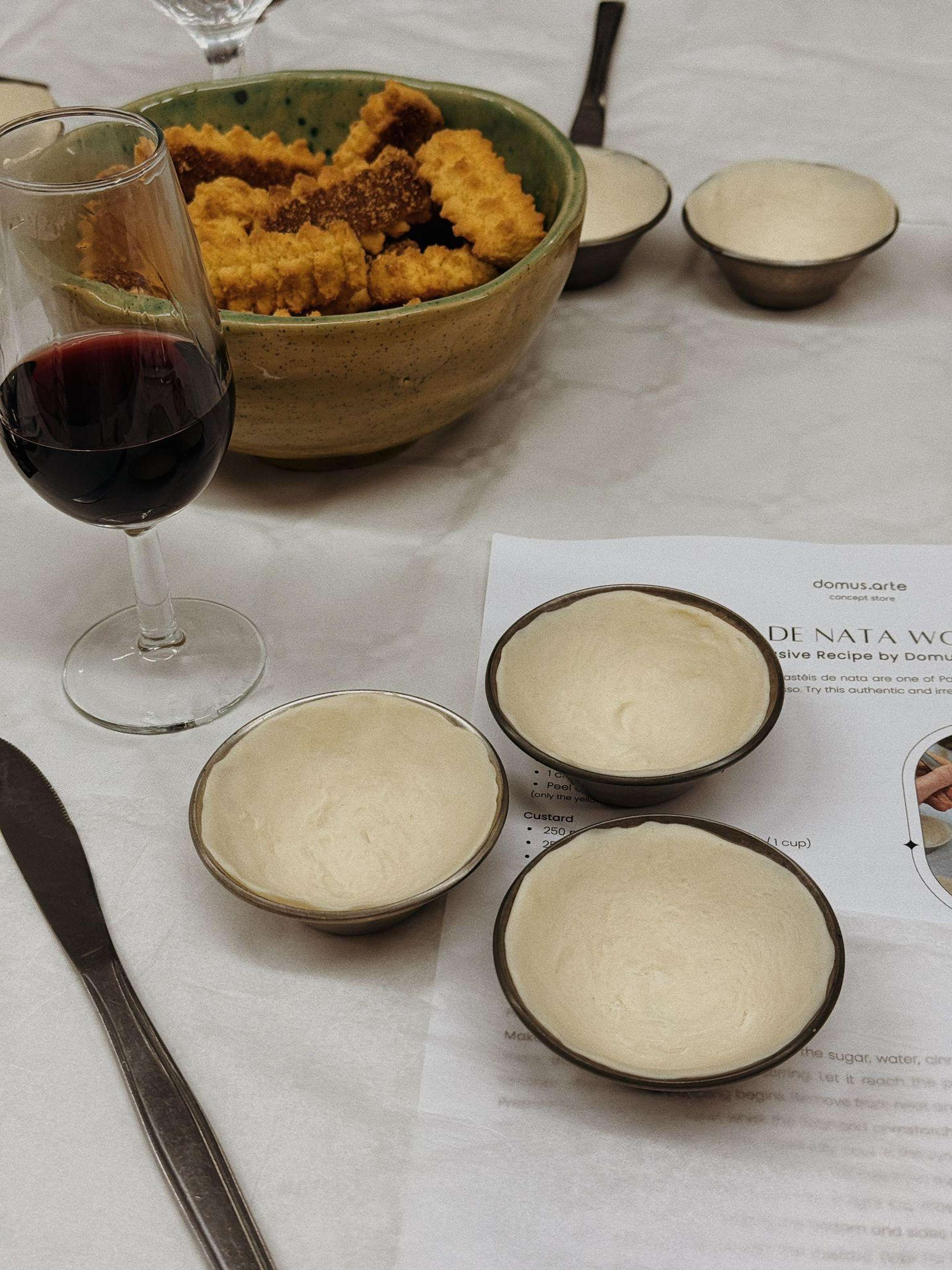
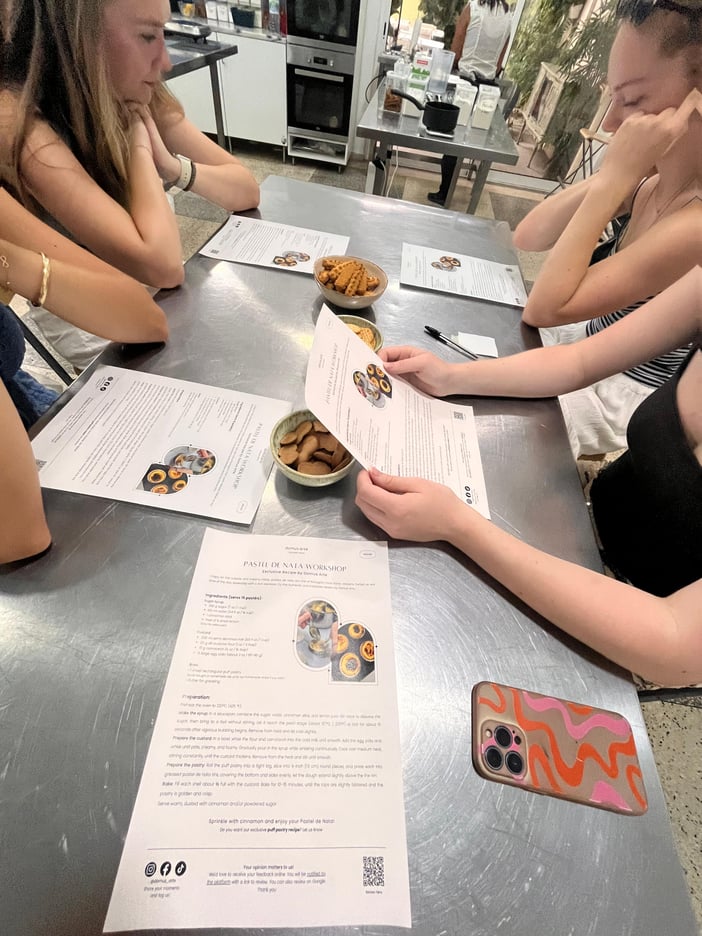 4.8k
Book a pastel de nata cooking class with Porto wine and turn the baking wait into a toast. Thousands of travelers have stirred the custard, sipped tawny Port, and gone home with the recipe. Small groups, step-by-step guidance, and a box of warm tarts to take with you.
tawny port pairs best with the tarts
Every session here ends the same way: warm tarts you made yourself, with a glass of Port or coffee alongside. The difference between them is how much you do and how the day is shaped, from a short studio lesson to a class plus a river cruise.
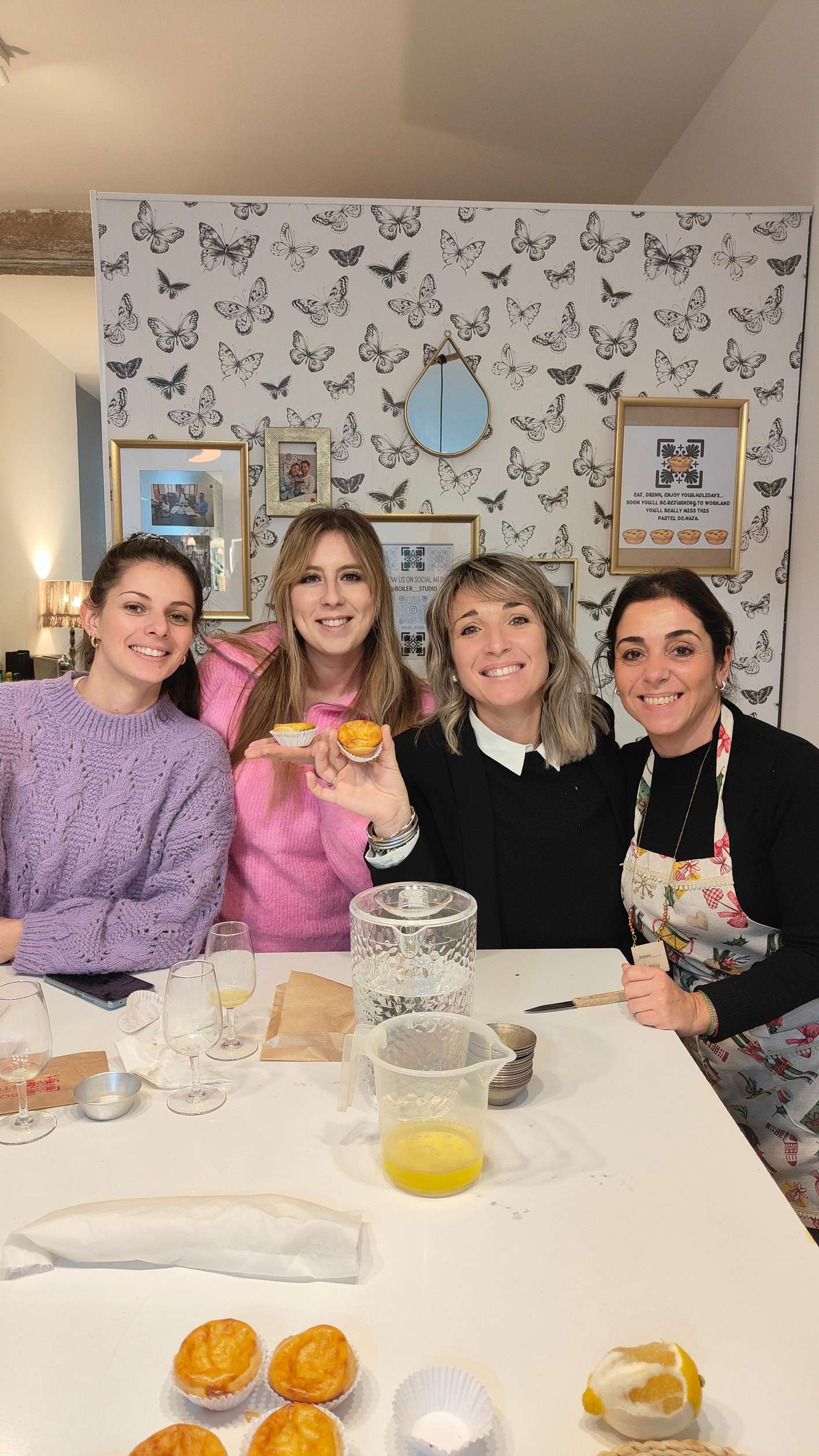 You want a drink in hand while the tarts bakePorto: Pastel de Nata Pastry-Making Workshop with cocktailsYou roll the pastry and mix the custard, then sip a glass of wine, Port wine or a mimosa while the tarts come out of the oven.From $39 You want the classic pairing class in central PortoPorto: Pastel de Nata Cooking Class with Port WineA step-by-step session near the Sé with Port wine, juice, water and coffee flowing, plus snacks and the house recipe to take home.From $37
 You want a relaxed, family-style kitchen with hostsPorto: Pastel de Nata Class with Isabel and JorgeYou bake the tarts from scratch in a cozy apartment with music on, then taste them with coffee, tea or a glass of Port.From $50
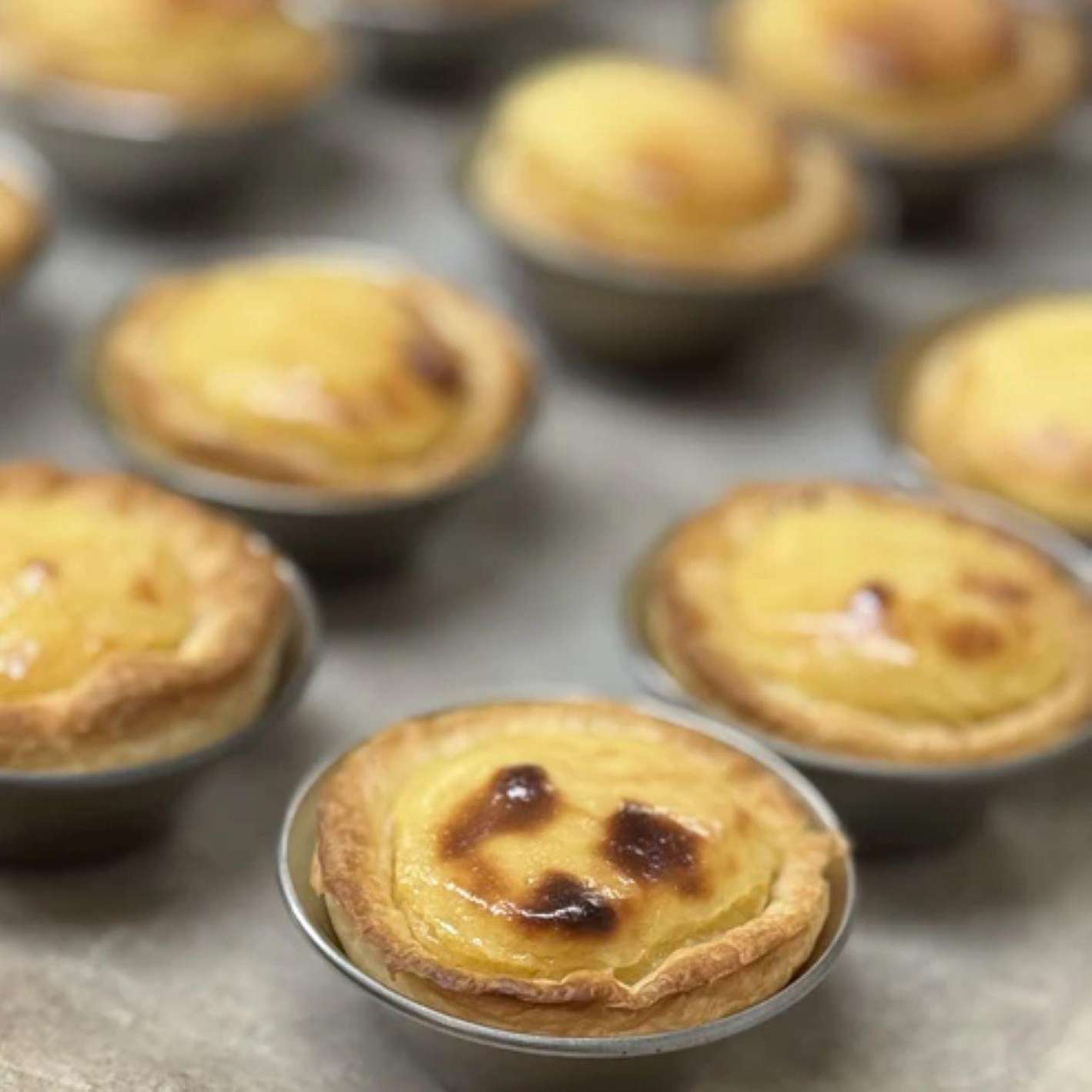 You want the class plus time on the riverPorto: Pastel de Nata Workshop and Douro River CruiseBaking and Port wine fill a 2.5-hour workshop, then a 50-minute cruise carries you under the bridges between Porto and Gaia.From $83
If you have celiac disease or a high gluten sensitivity, choose a gluten-free option only where the kitchen is fully separated from regular baking, and ask the tour operator in advance whether your session can be held that way.
tawny port pairs best with warm tarts
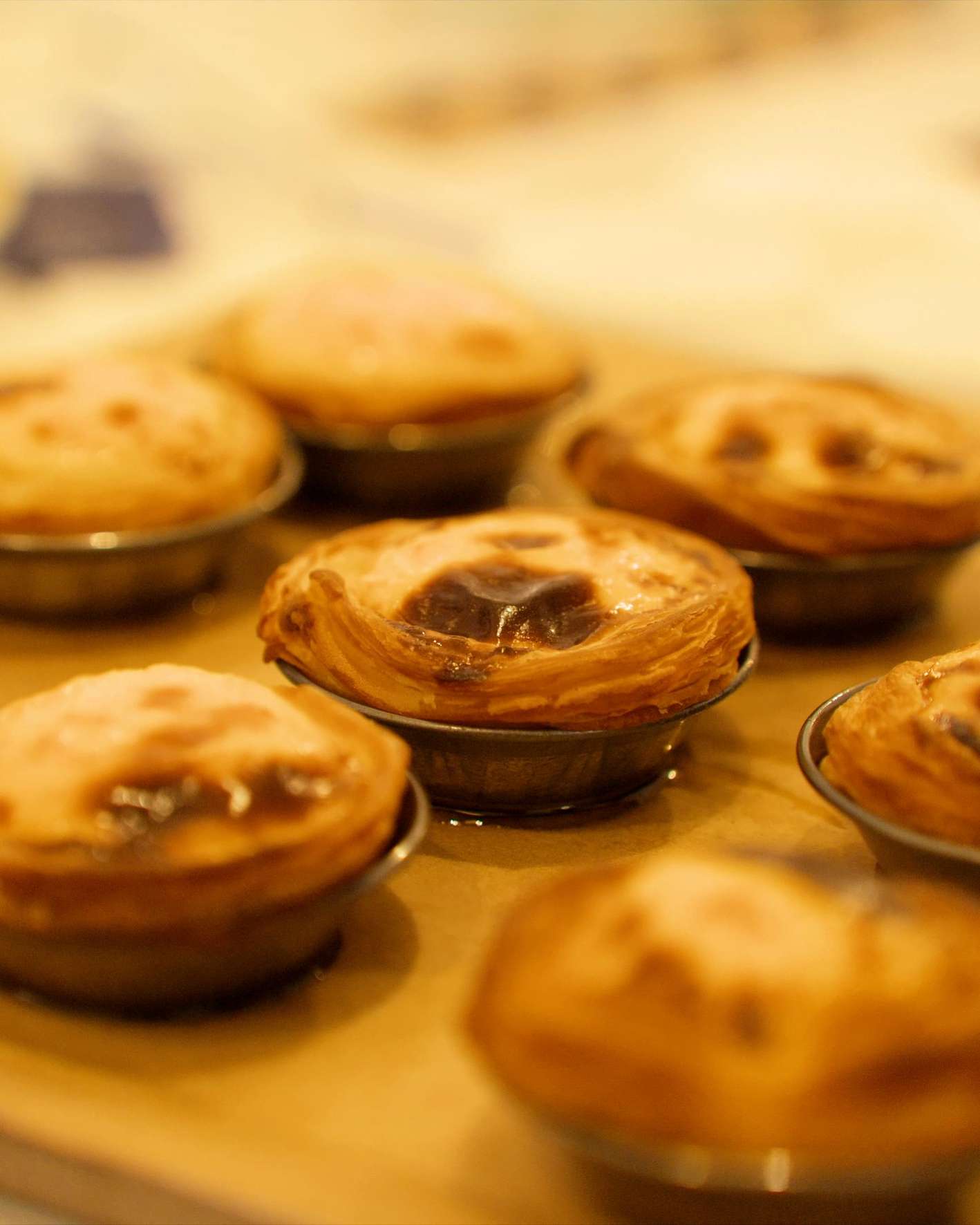
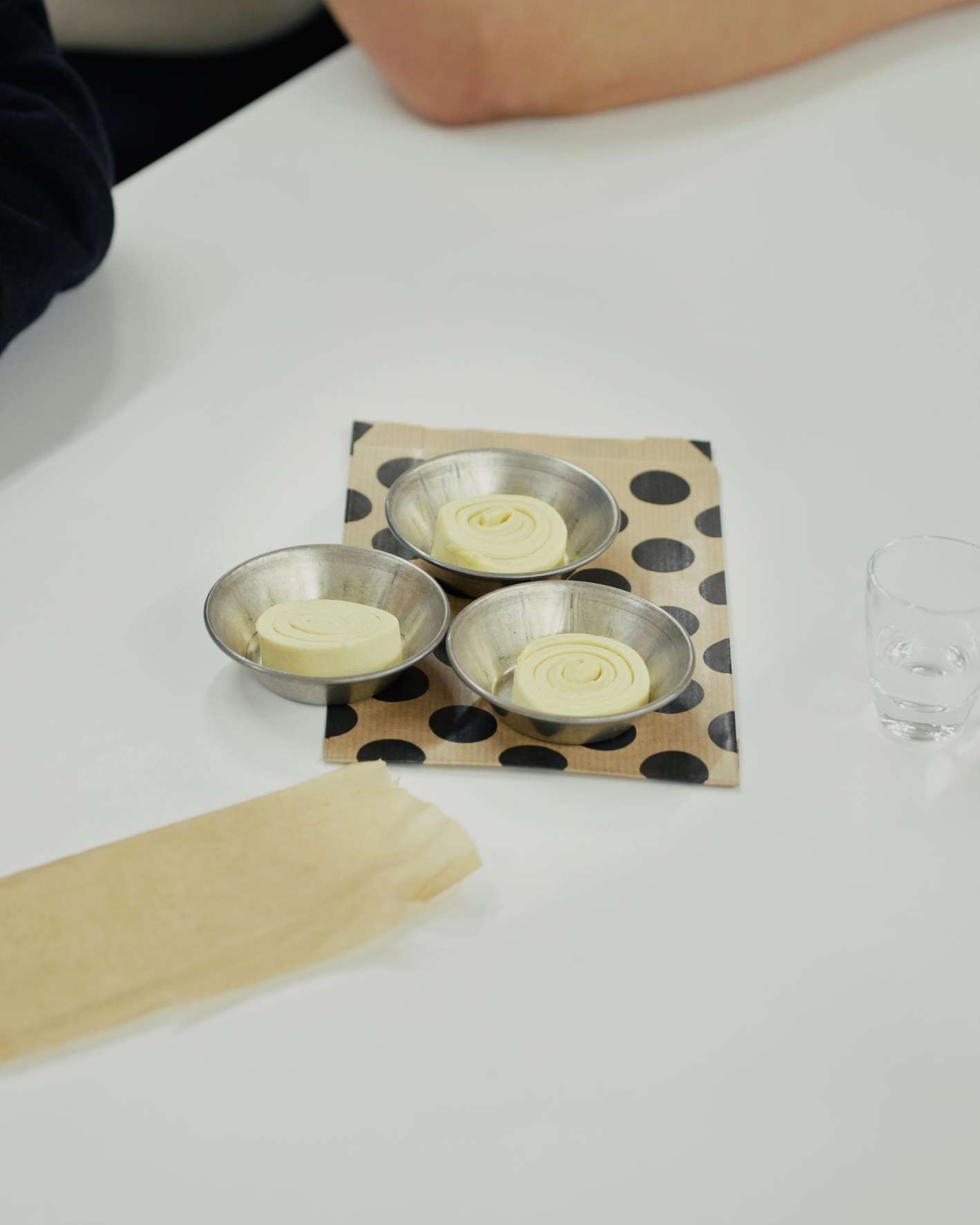
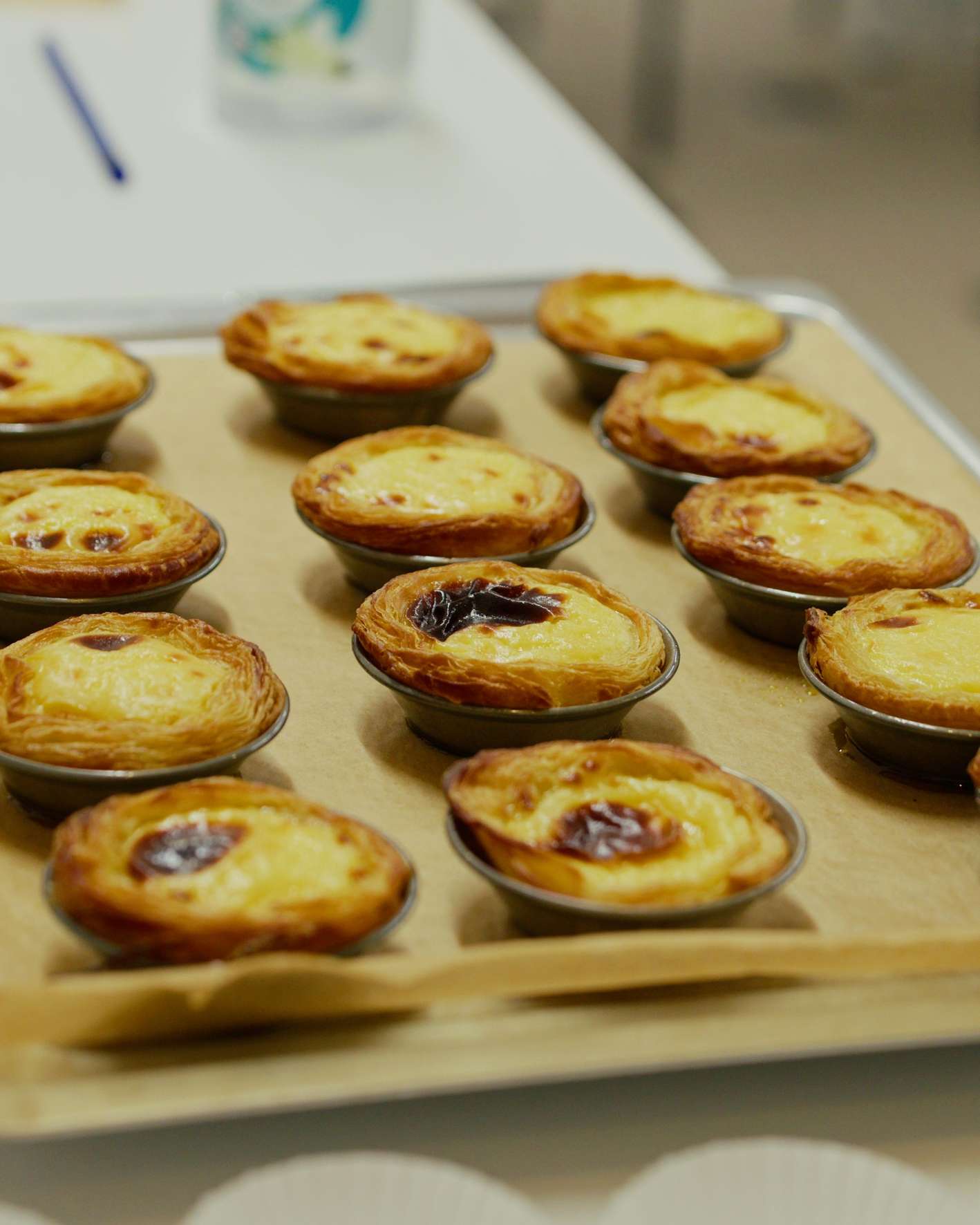
This workshop draws the biggest crowd, with 2,542 reviews at a 4.9 rating, and you choose wine, Port or a mimosa.
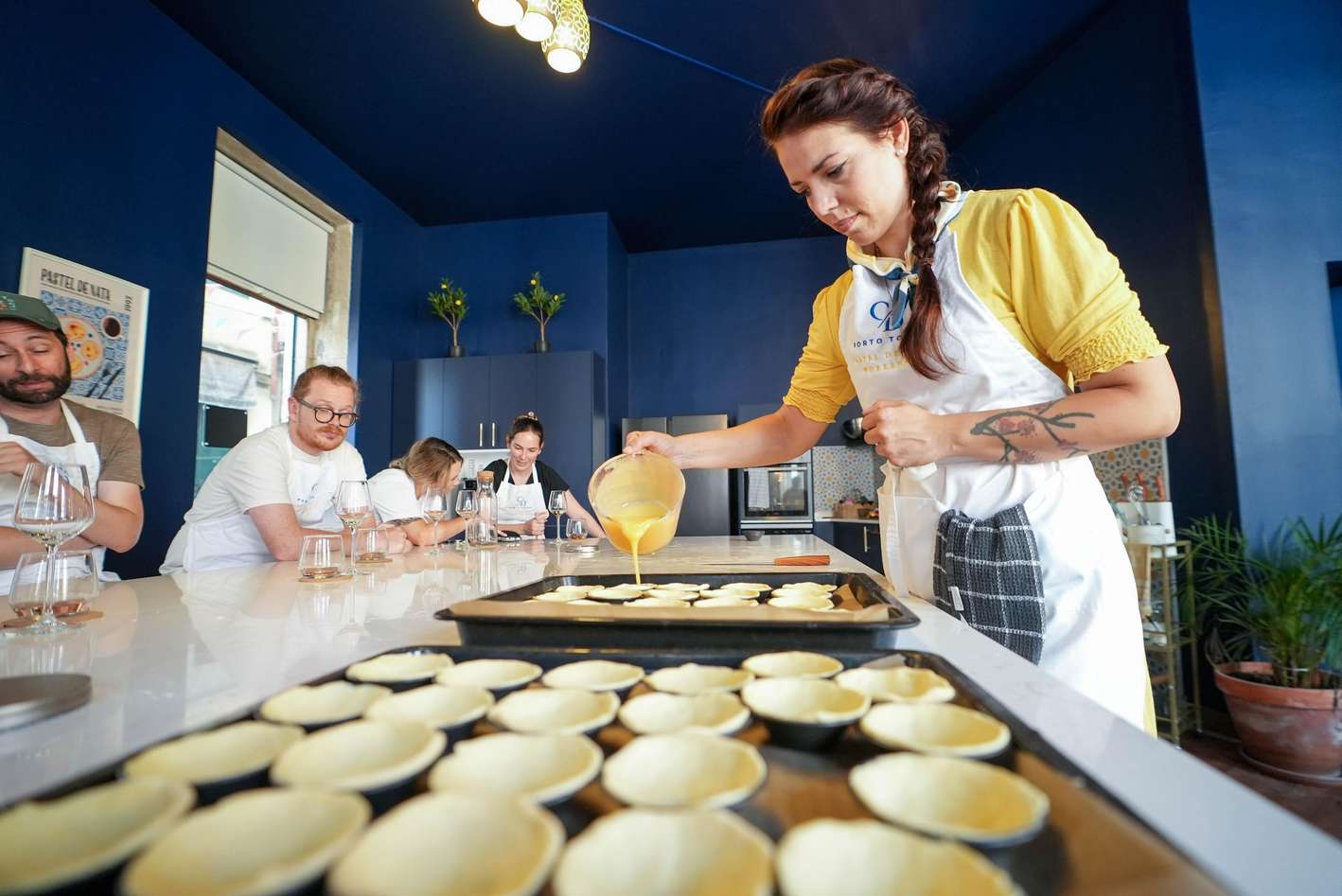
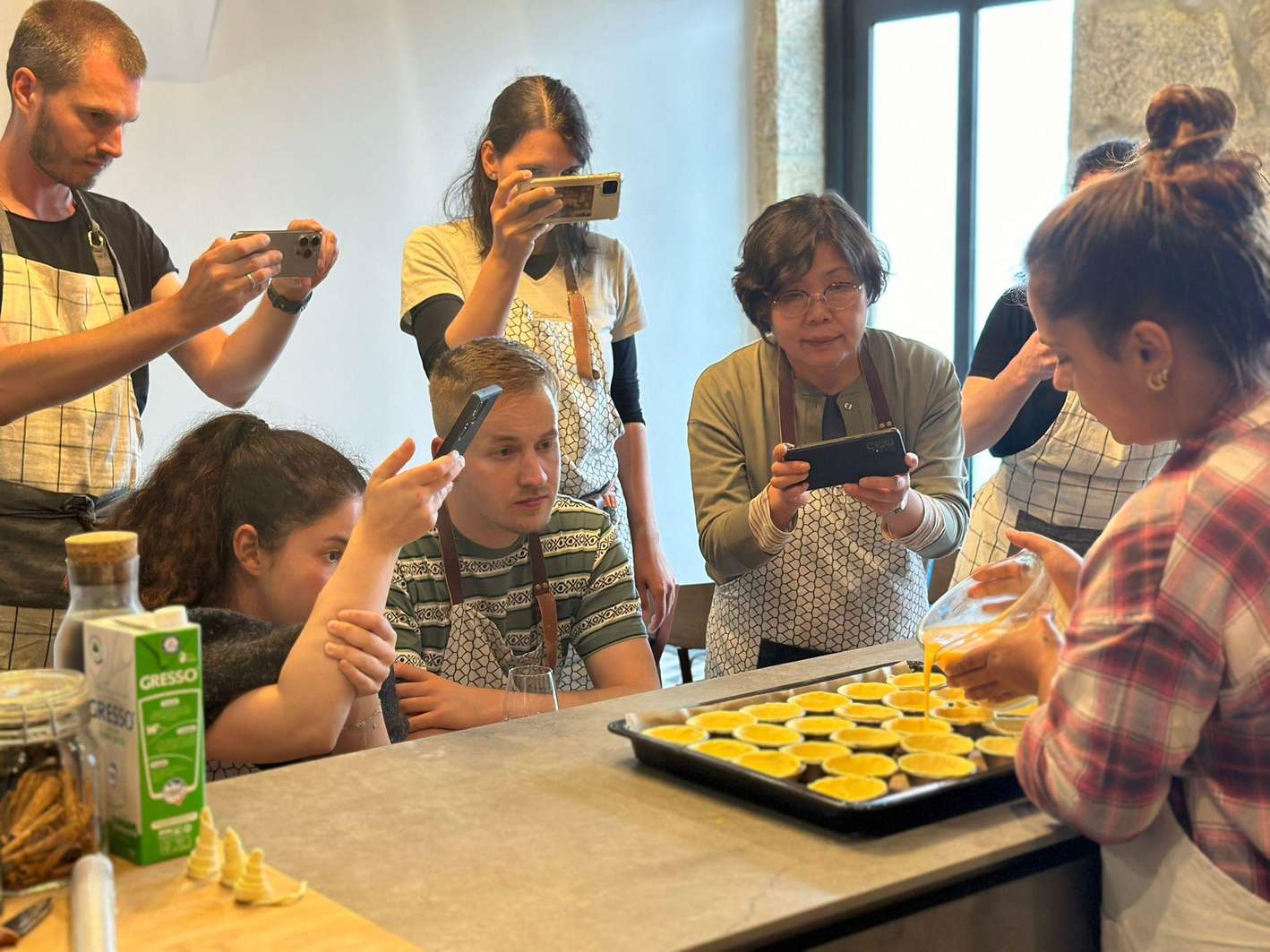
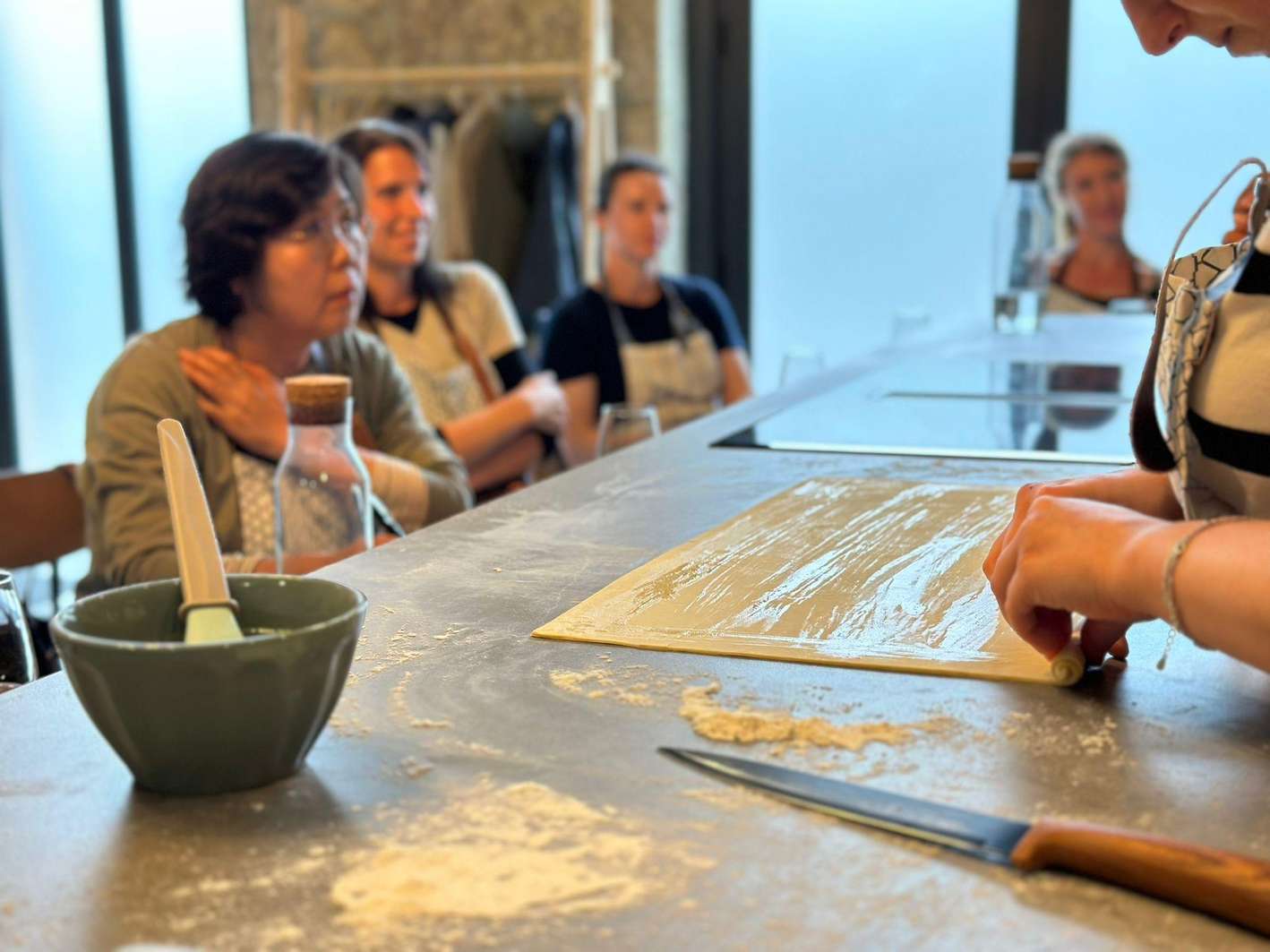
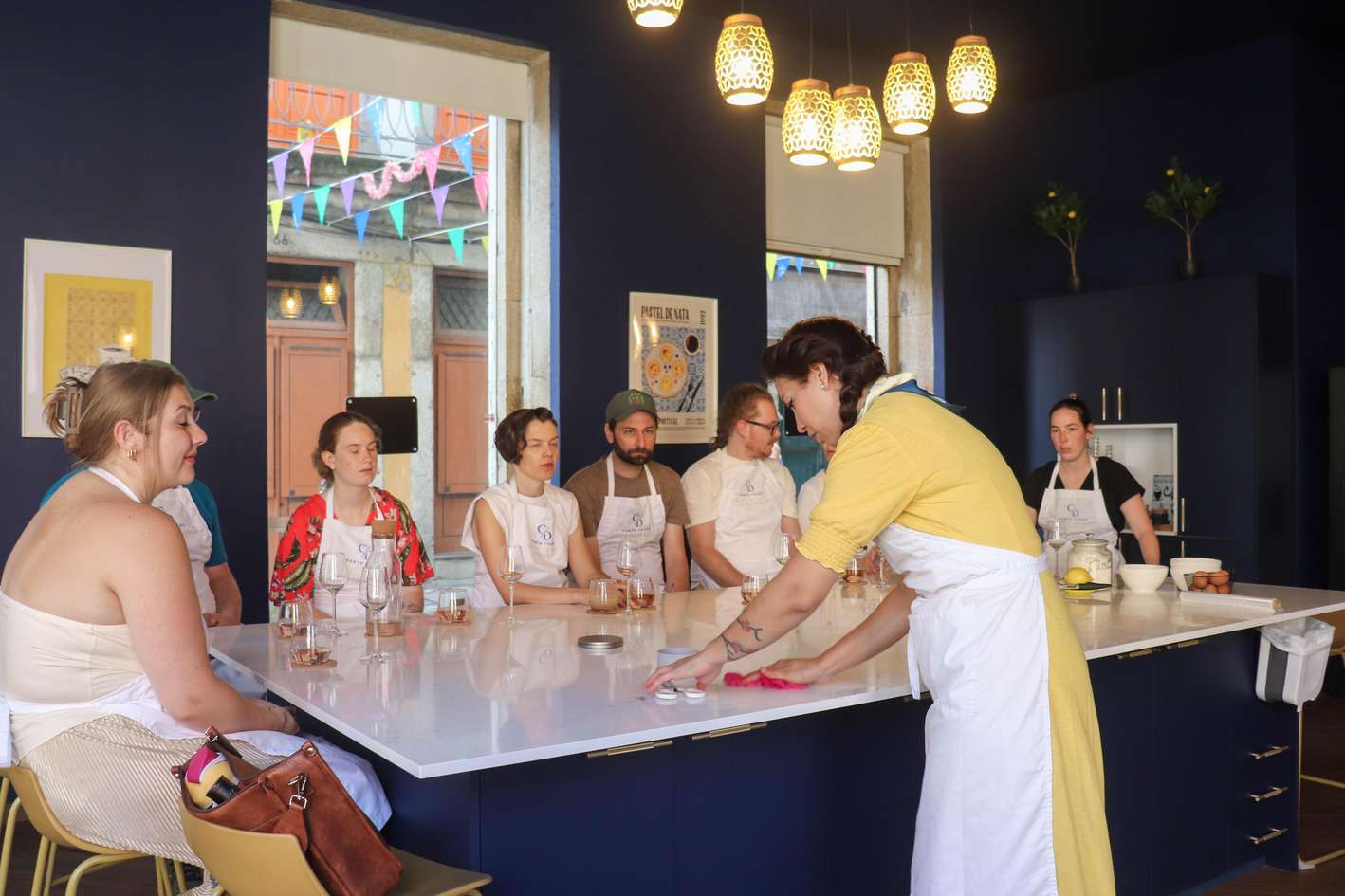
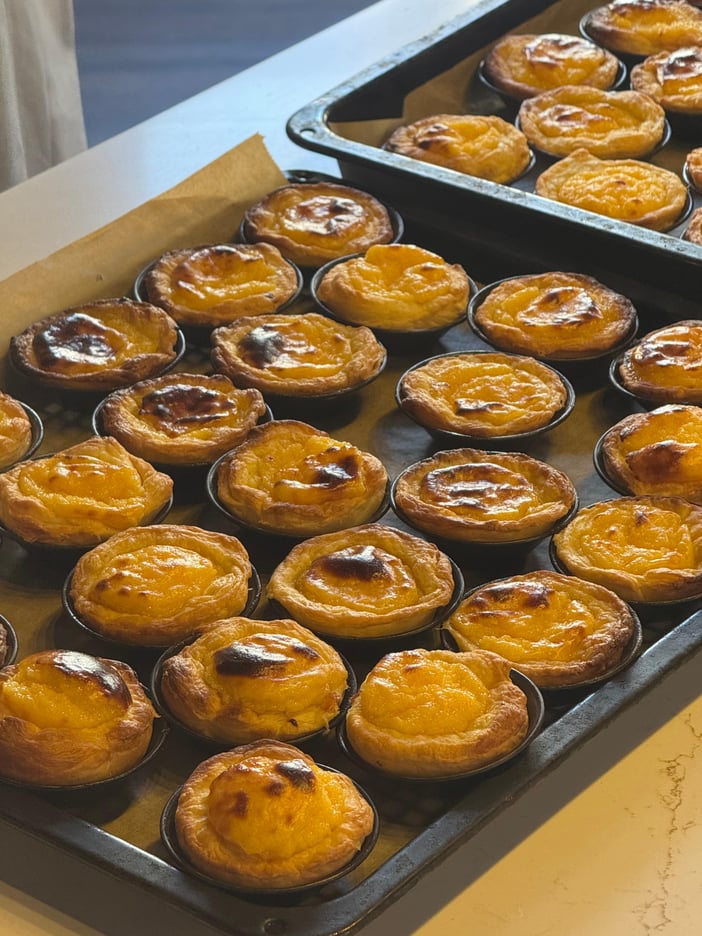
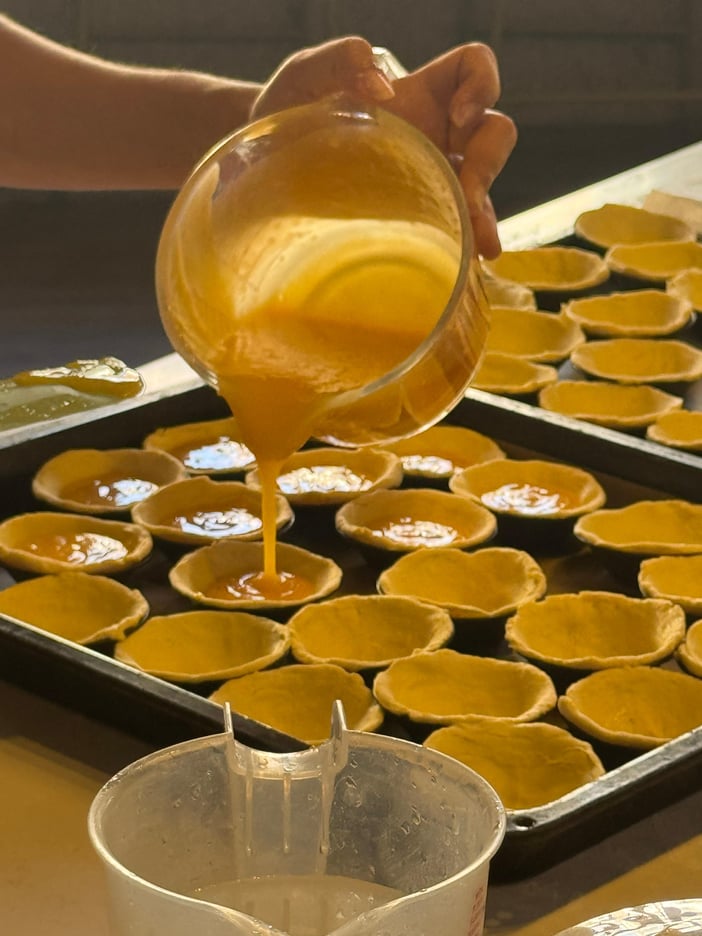
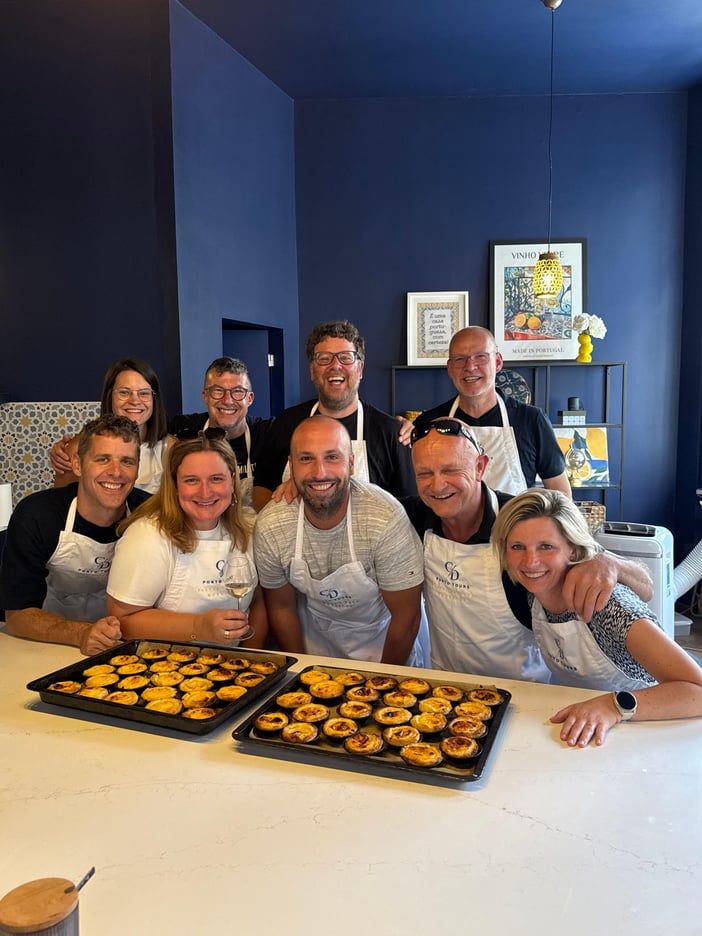
The longest class at 2.5 hours, and one of the few where you make the dough yourself before tasting regional wine.
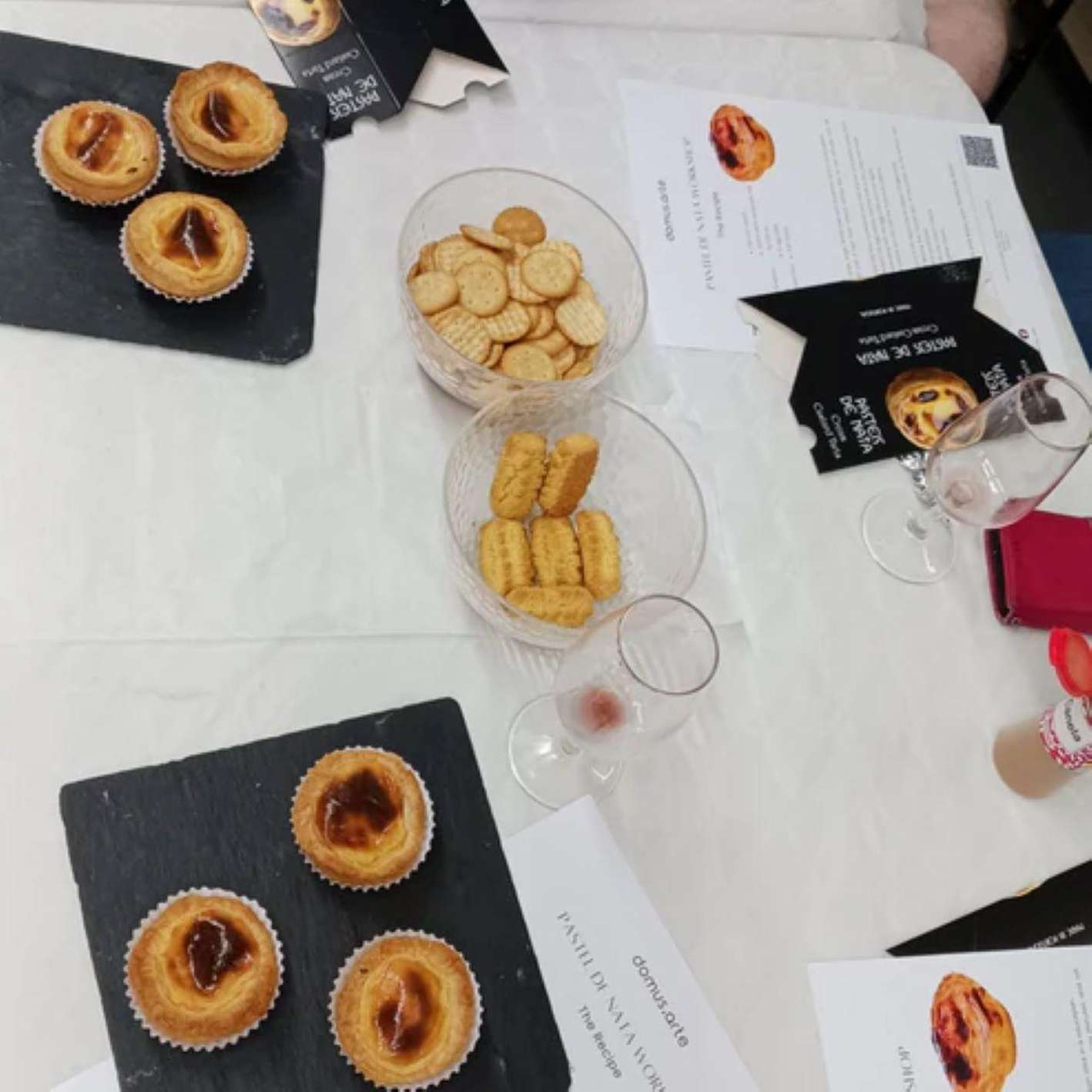
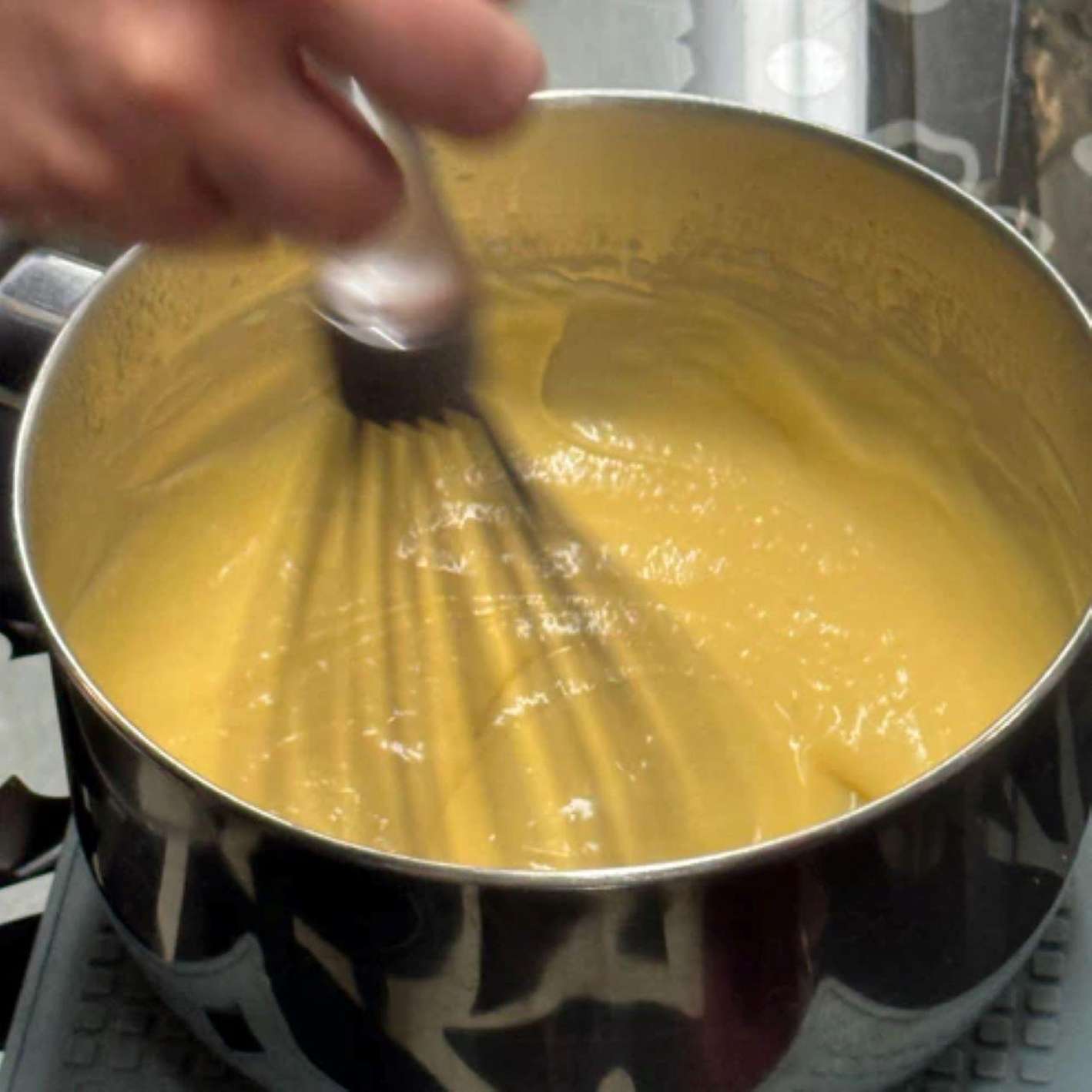
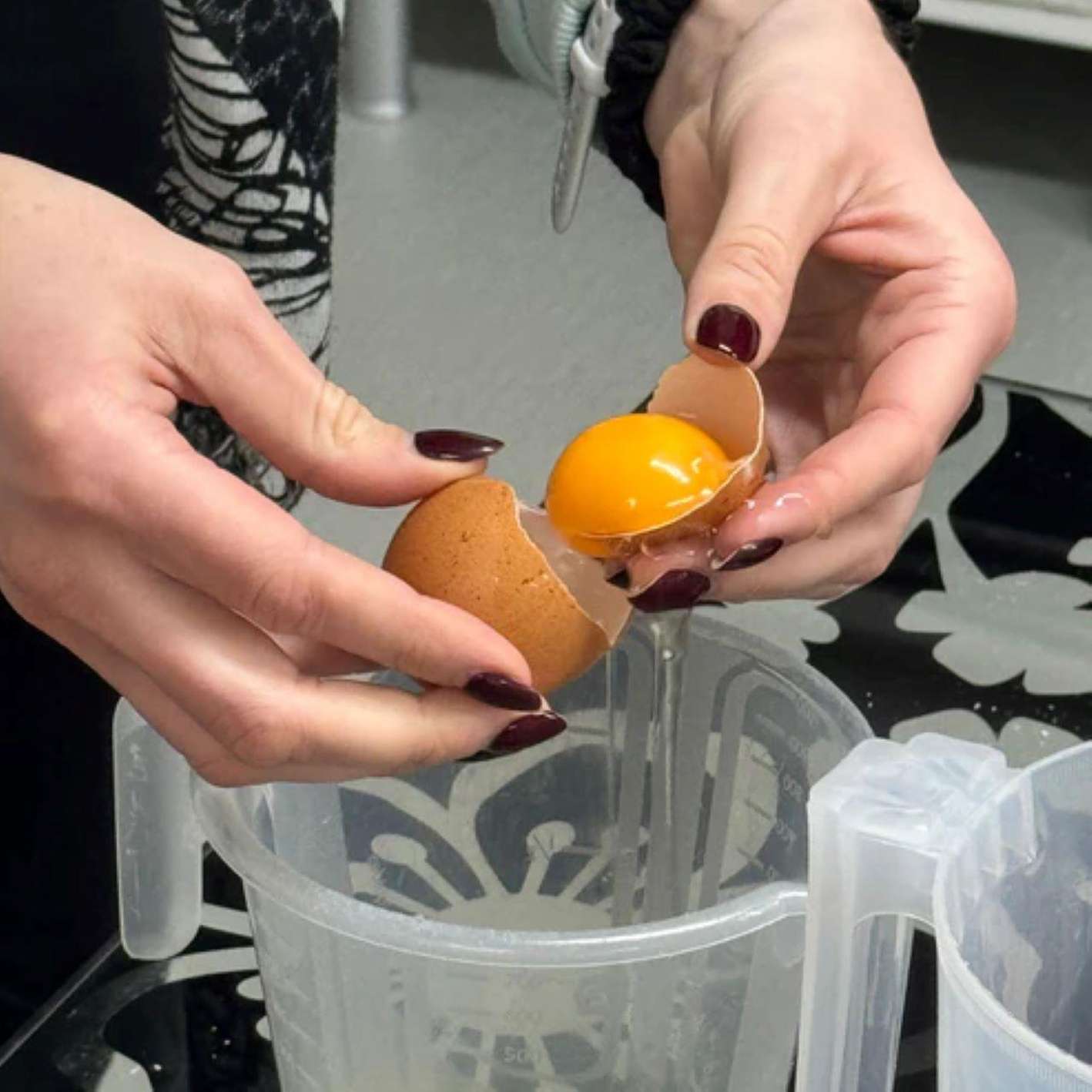
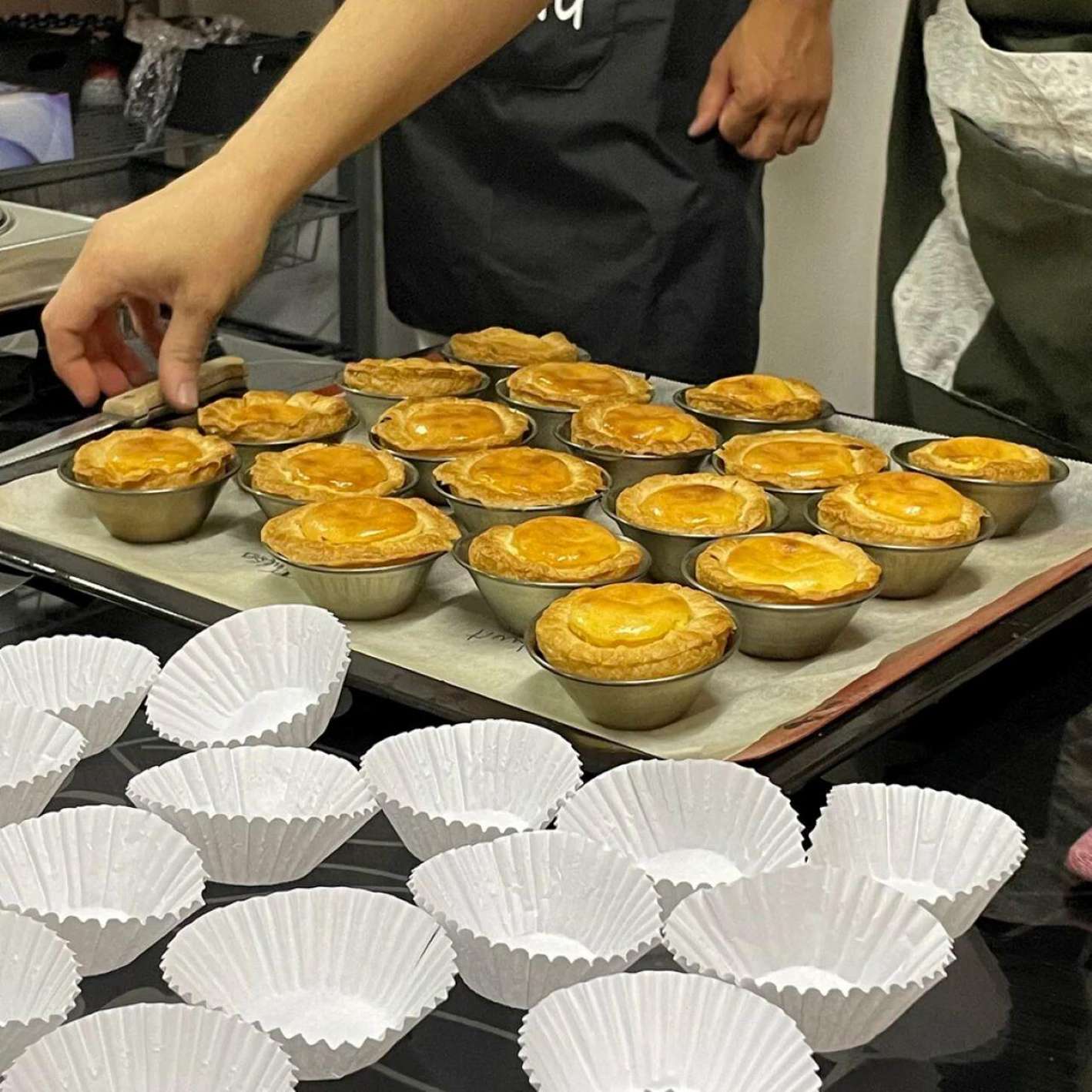
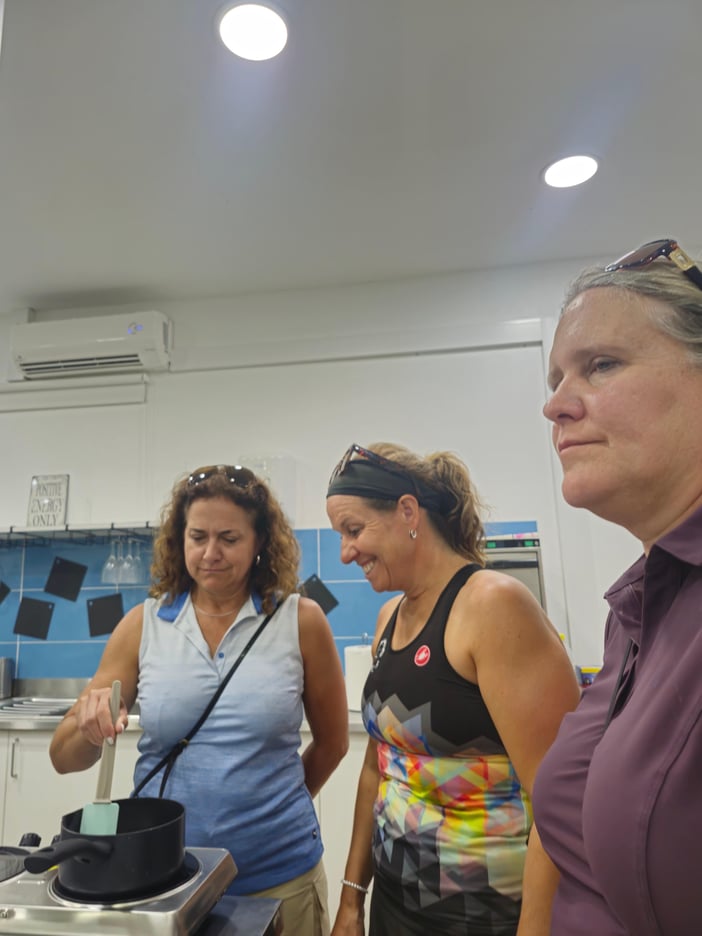
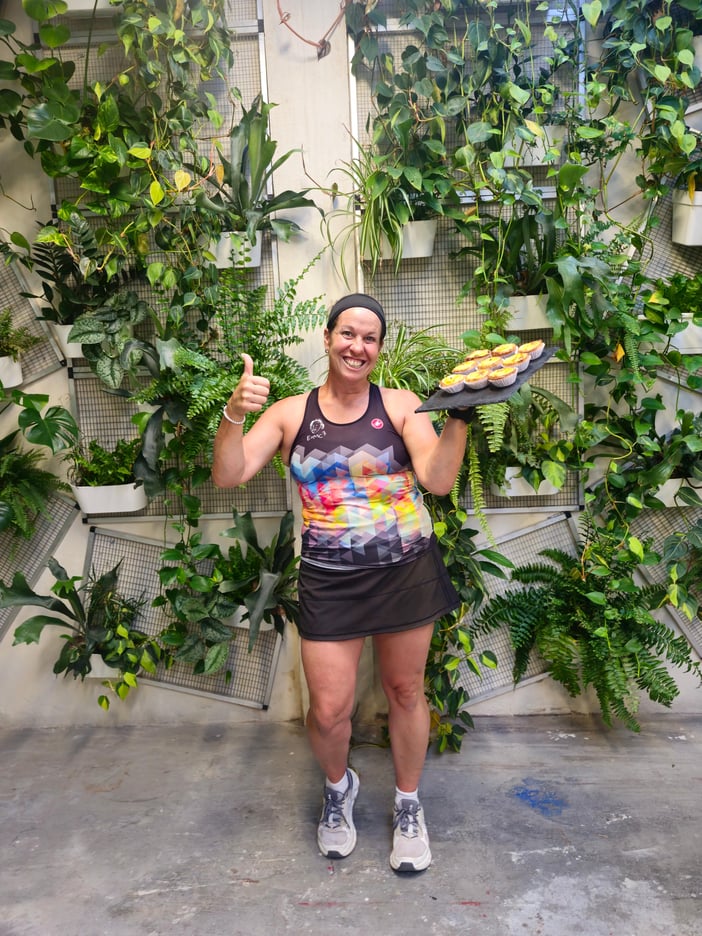
One booking covers a 2.5-hour workshop with Port wine and a 50-minute cruise on the Douro, all in 3.5 hours.
tawny port is the classic match for the custard
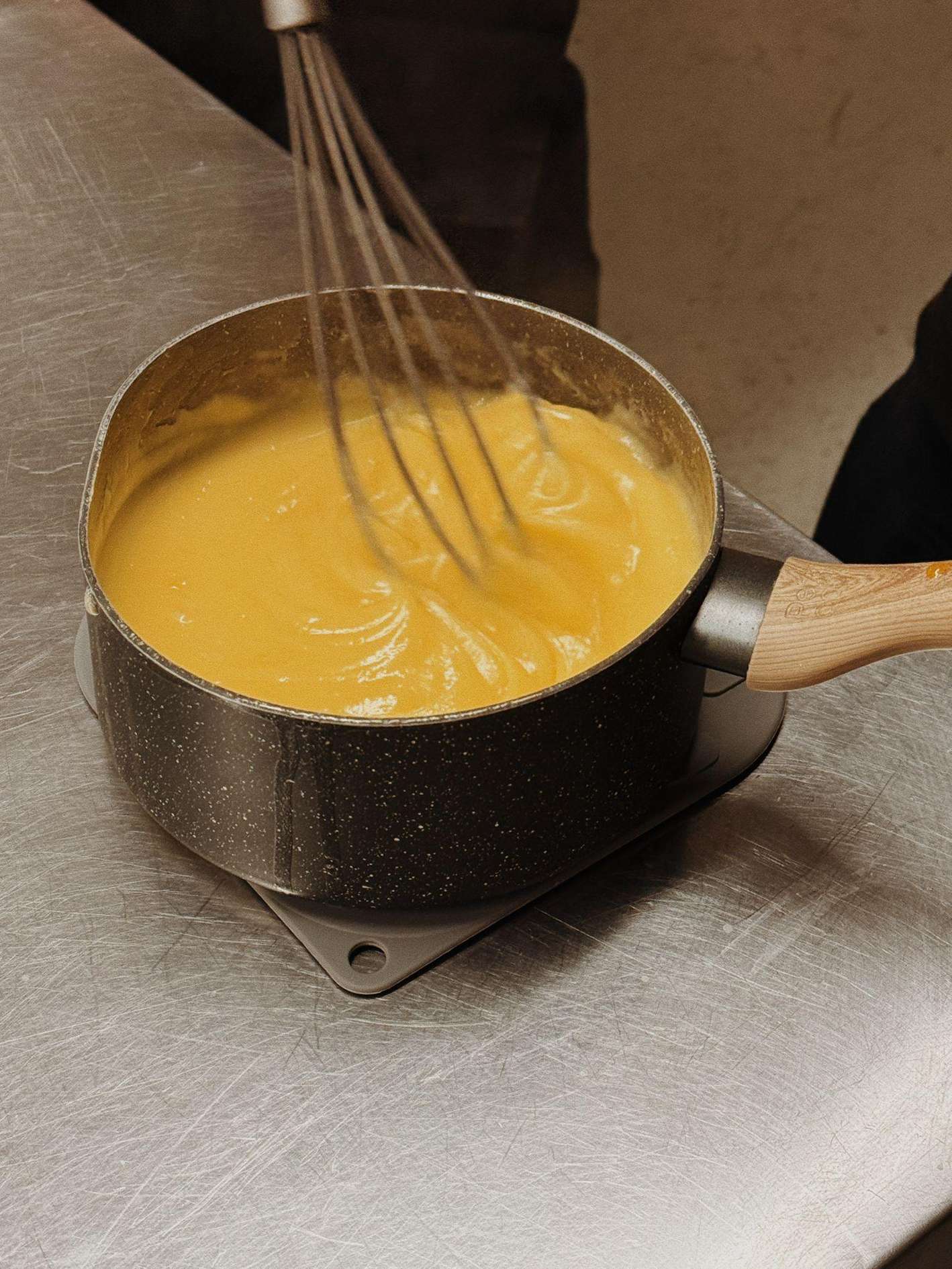
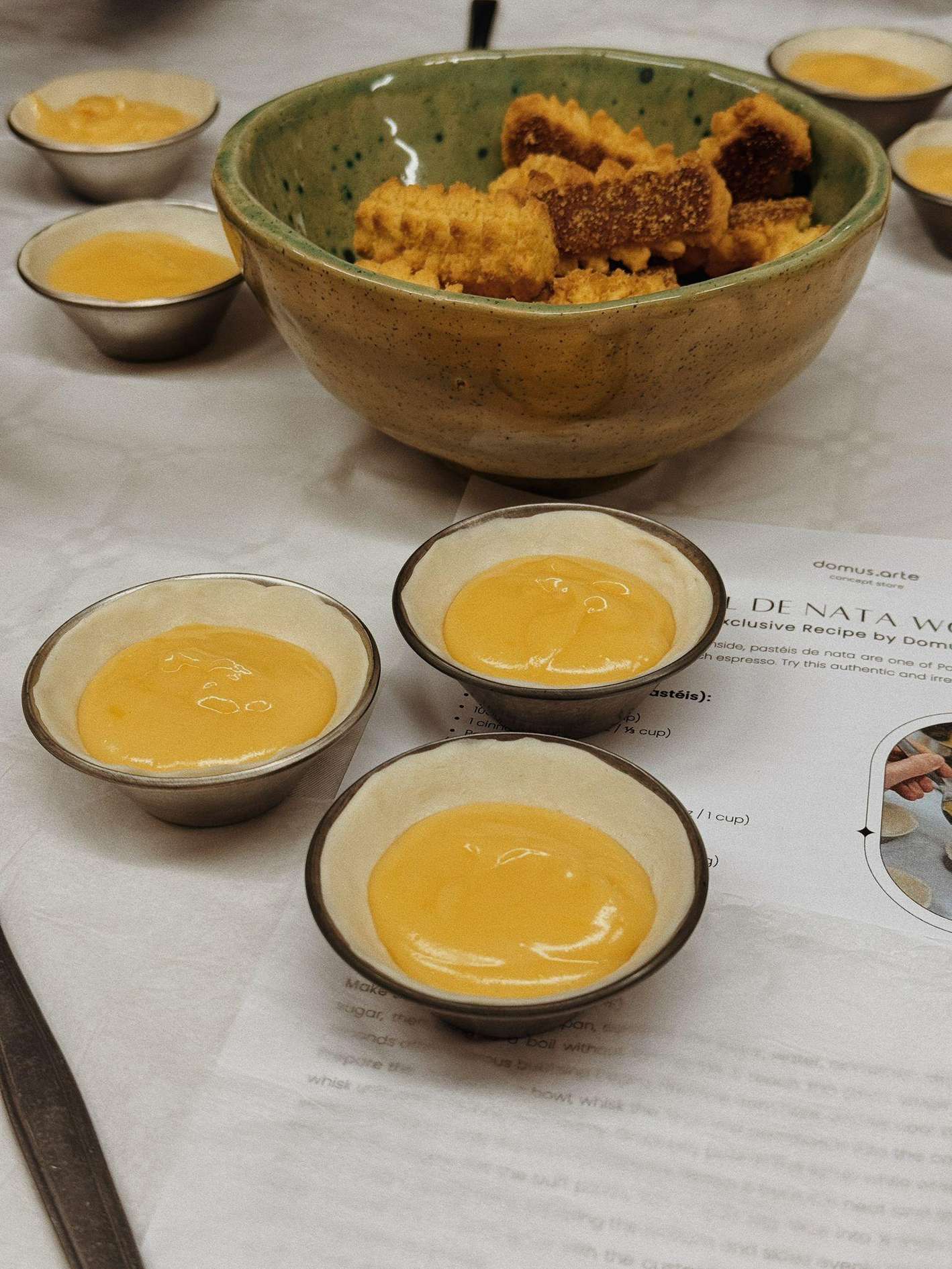
The first thing you taste is the custard you whisked yourself, still warm from a very hot oven, with a glass of Port on the table.
In this cooking class with wine you work through the filling and shaping step by step, take turns with the rest of the group at the work stations, and listen to a short history of how the tart went from Lisbon's convents to every bakery counter in Portugal.
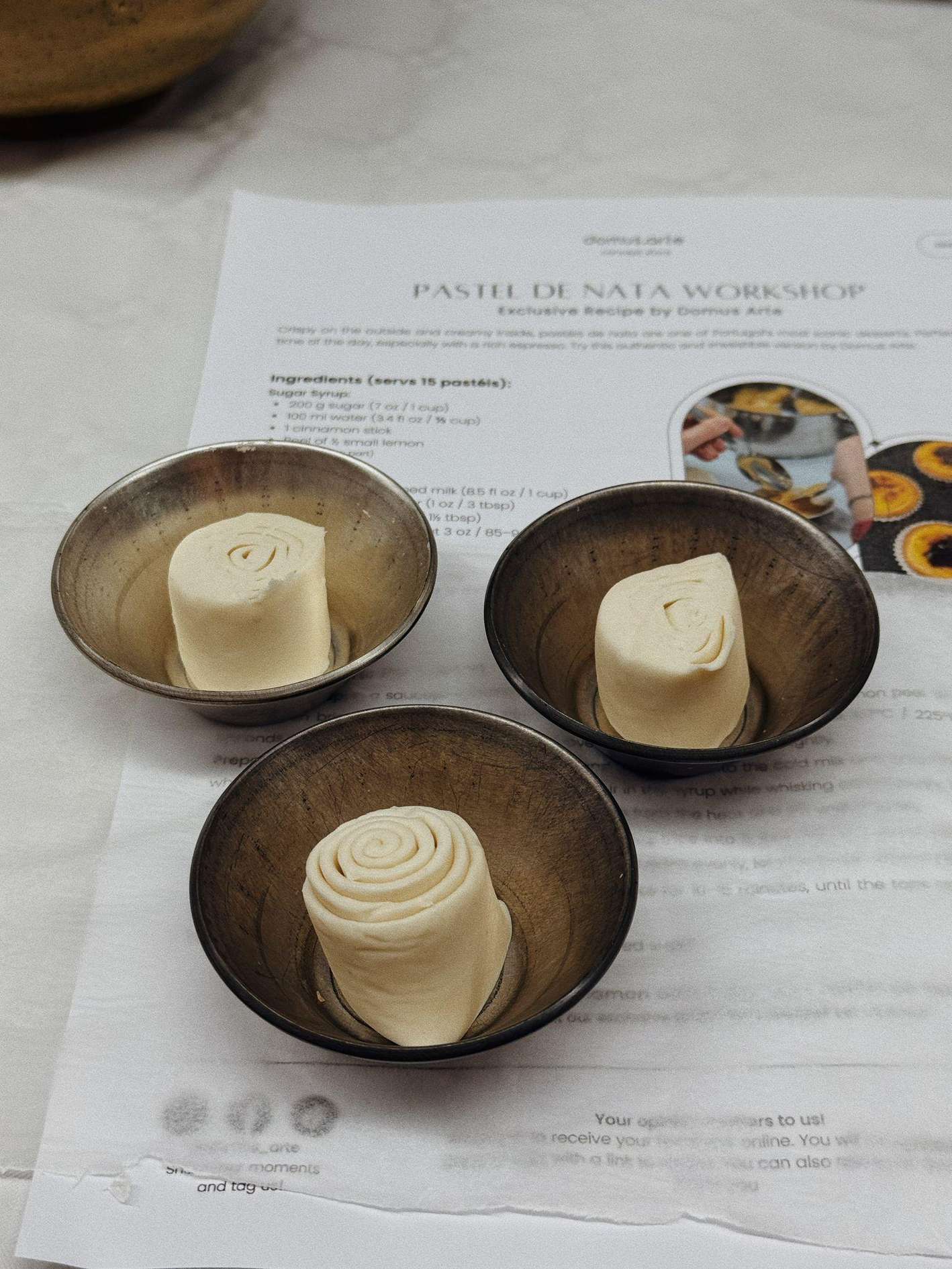
The puff pastry arrives pre-prepared, because real laminated dough needs hours of resting and folding, and the recipe for making it at home goes in your bag.
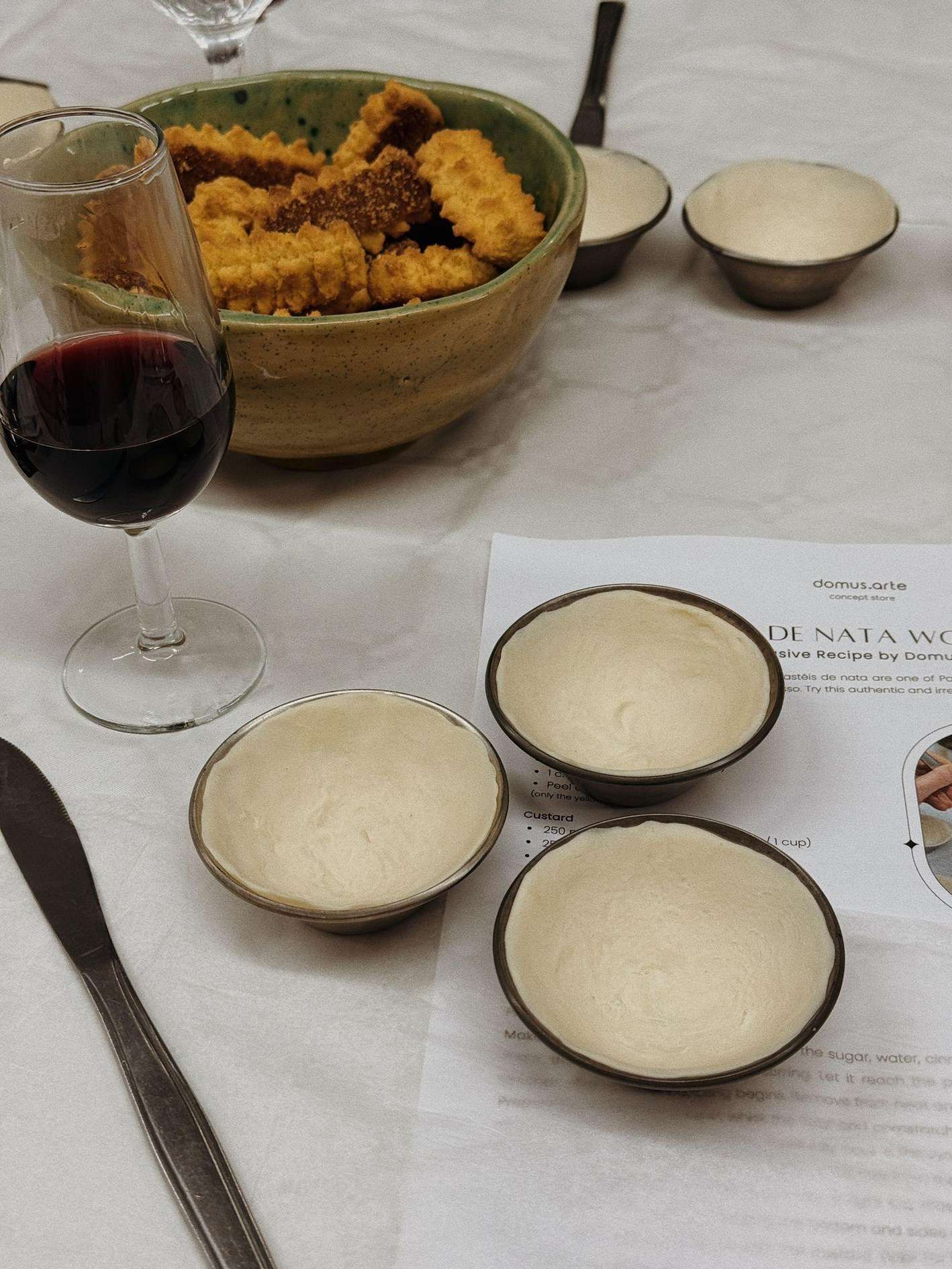
Drinks run the whole session: Port, juice, water and coffee, plus a few snacks. When the pastries come out, you eat some on the spot and box the rest to take away.
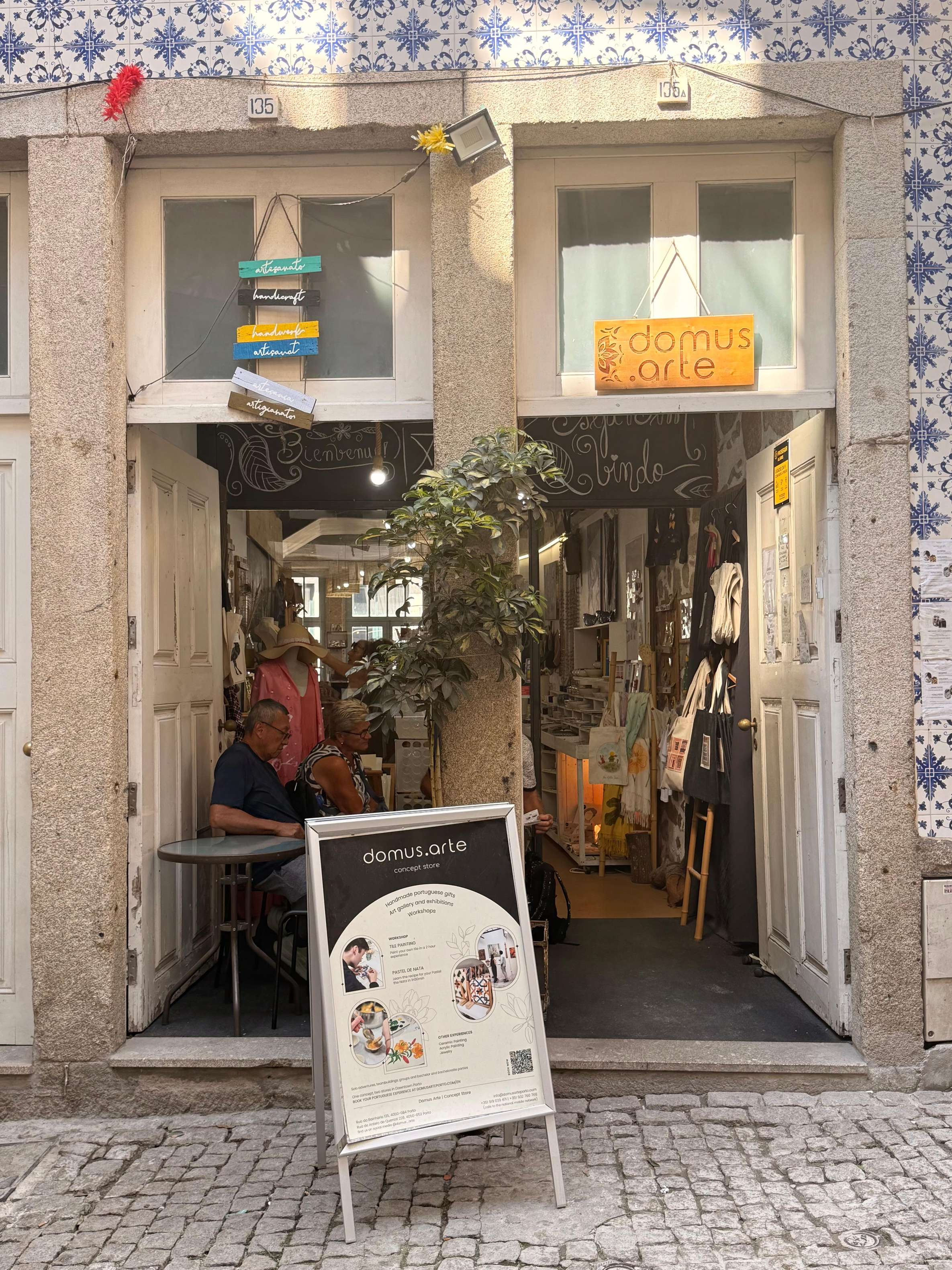
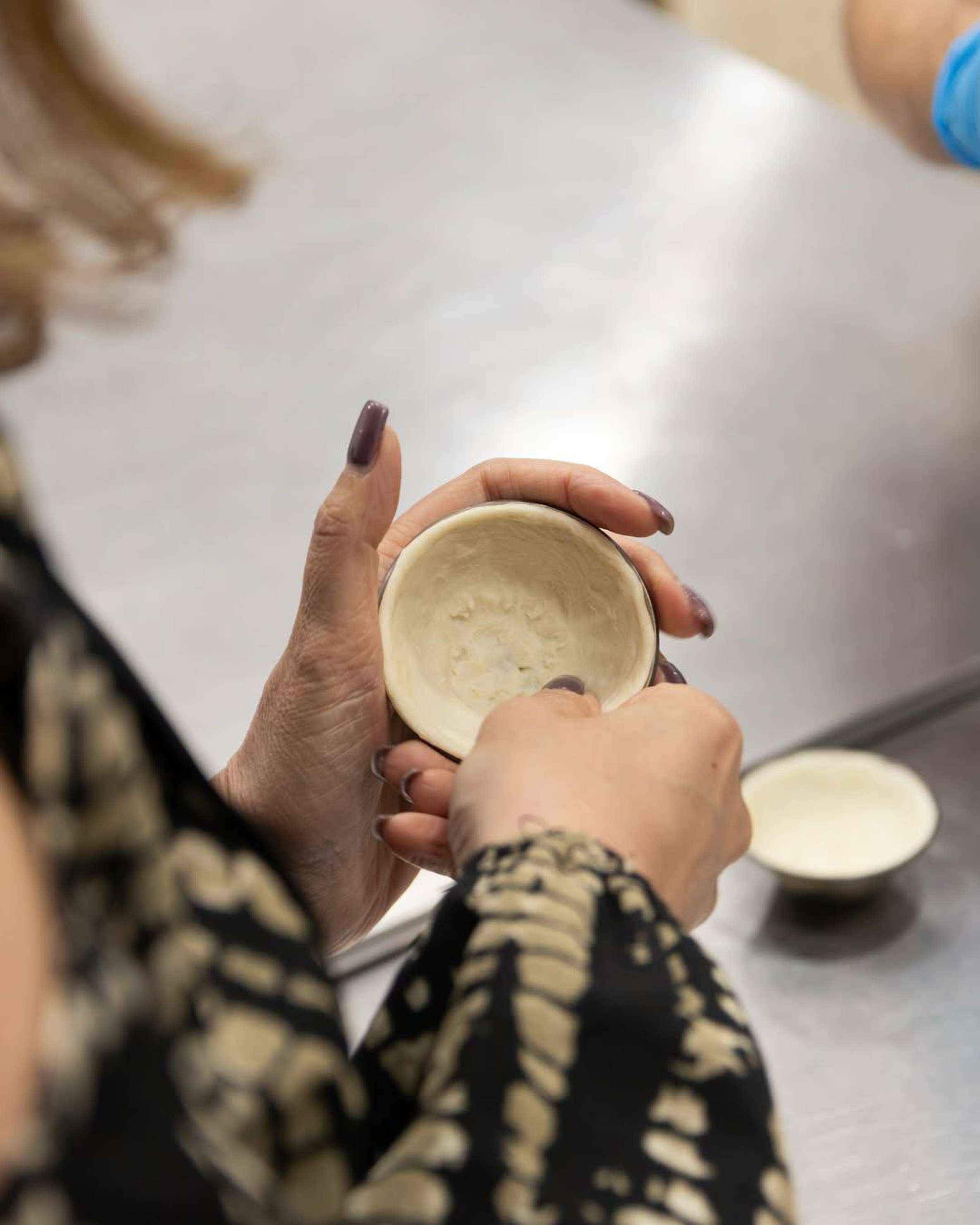
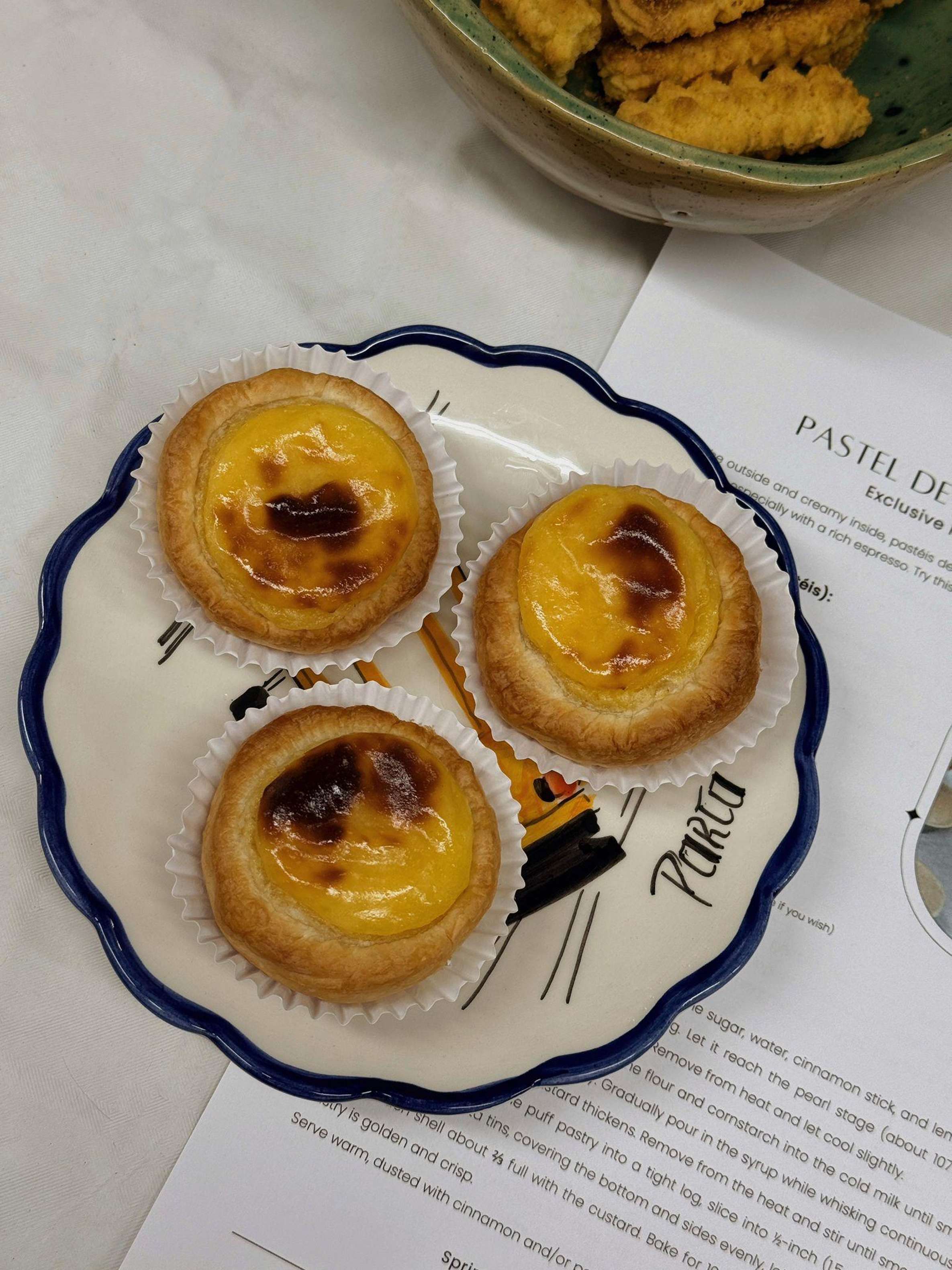
tawny port balances the custard best
Green marks the lowest price. Prices per person.
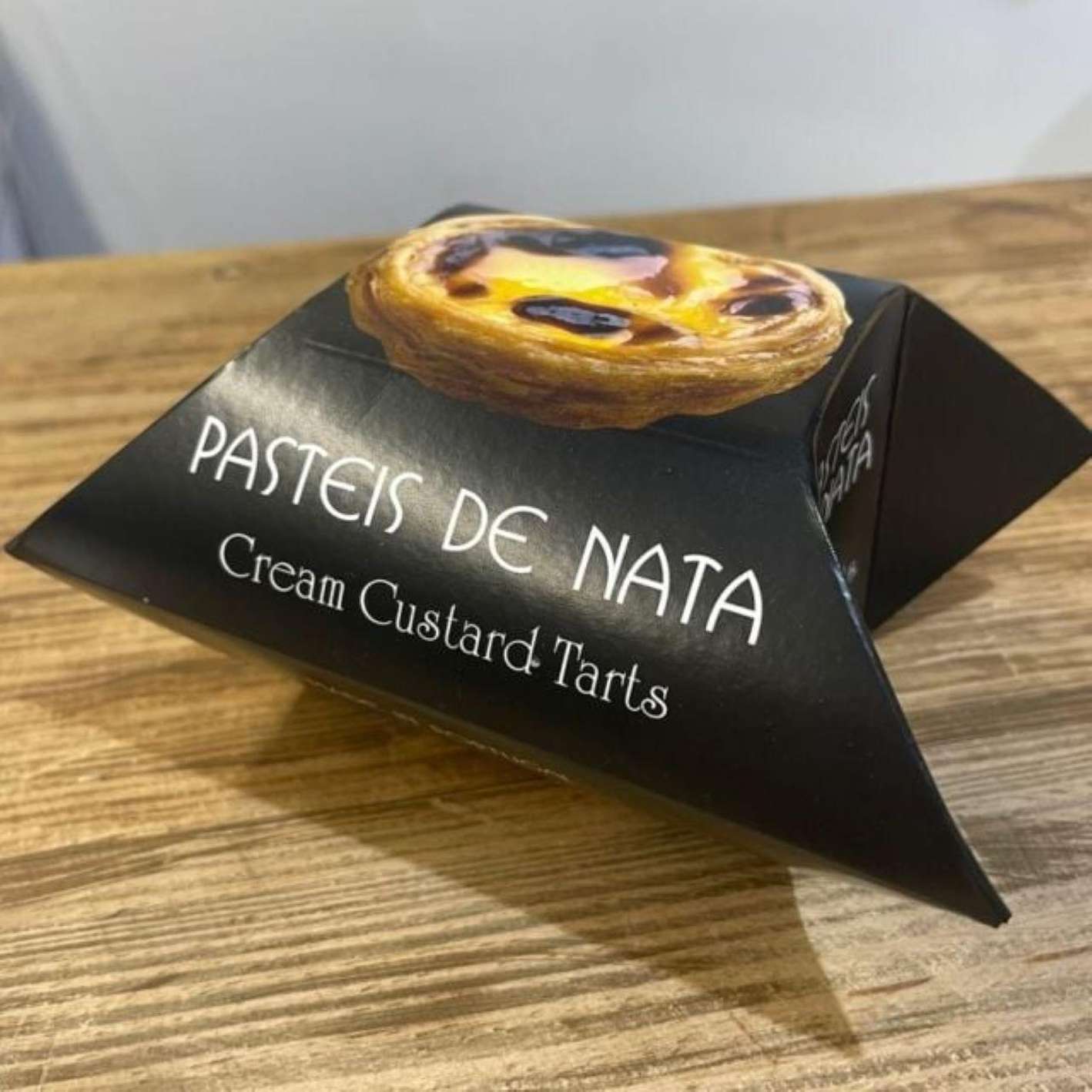
busiest in august and september
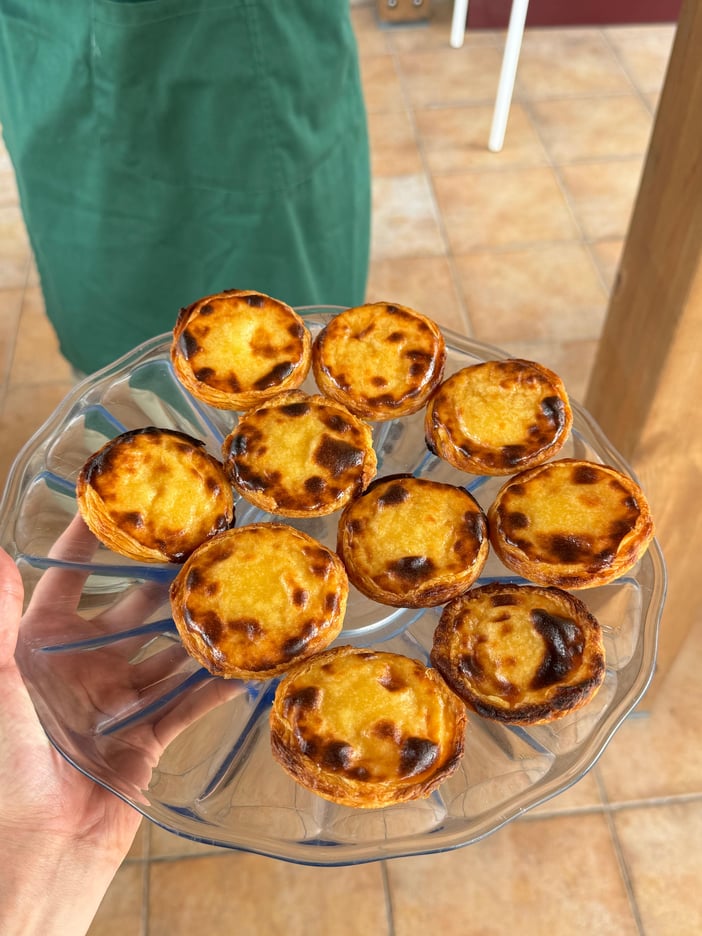
Such a magical moment with my two girls and my mum ❤️ We learned to.
Stop and book this now. I'm a 20-year-old who hates cooking but had a blast. Amazing local women, drinks, good conversation, delicious nata, and food tips for Porto. Great for solo travelers!
A great baking class with a lovely group, we chatted and baked together, which made the recipe easier to understand. My homemade pastel de nata were super tasty; I'll definitely bake them again! 😋
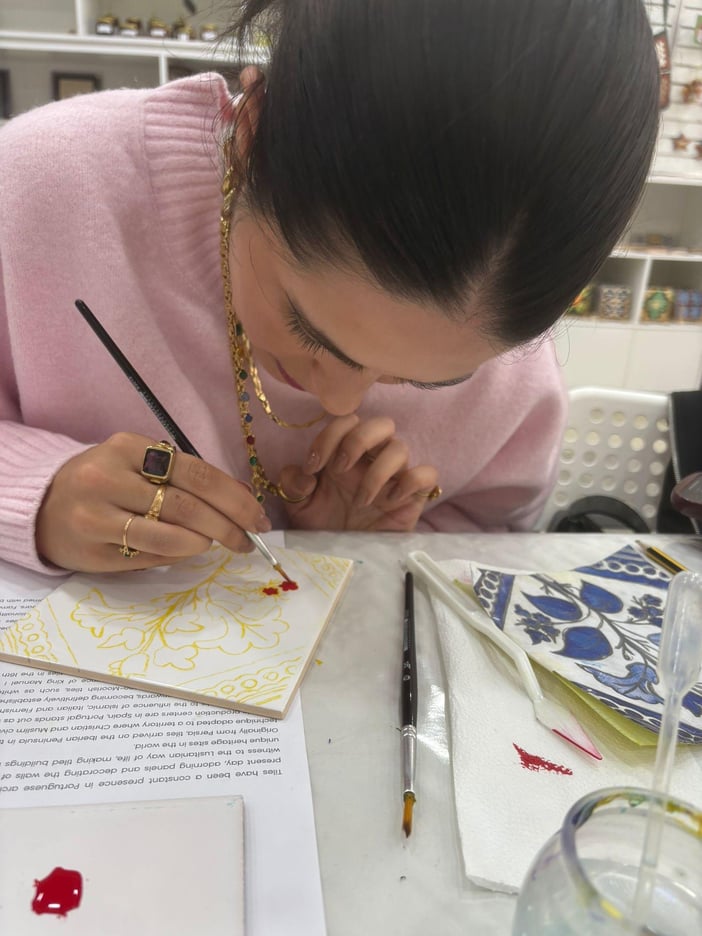
Super interesting, such a cool activity, I really loved it. The port wine is great! Highly recommend!
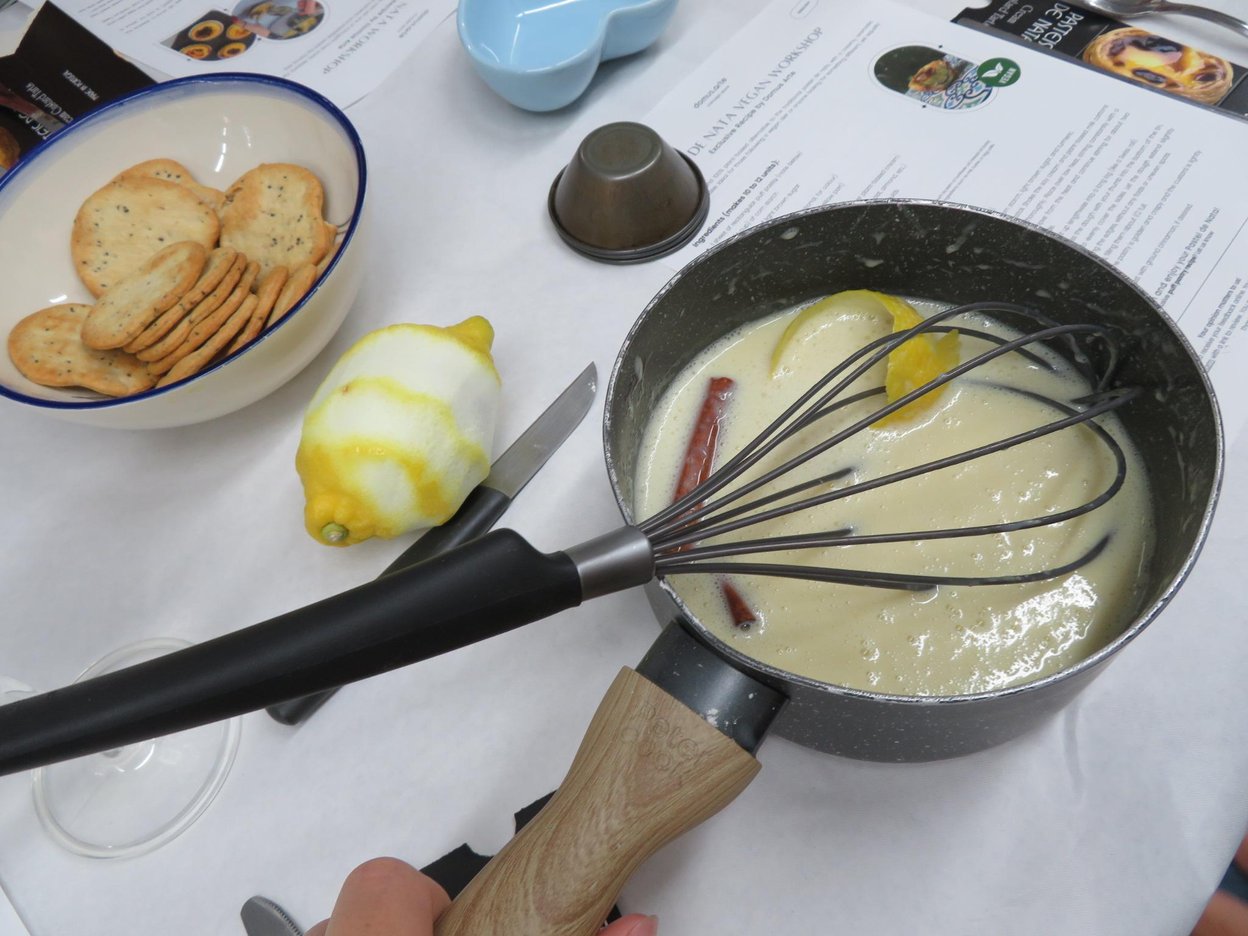
So much fun! The tour was super accommodating for different dietary restrictions. Highly recommend!
Great teachers, very welcoming staff, wonderful experience with my sister and friends! Darlene from Canada!
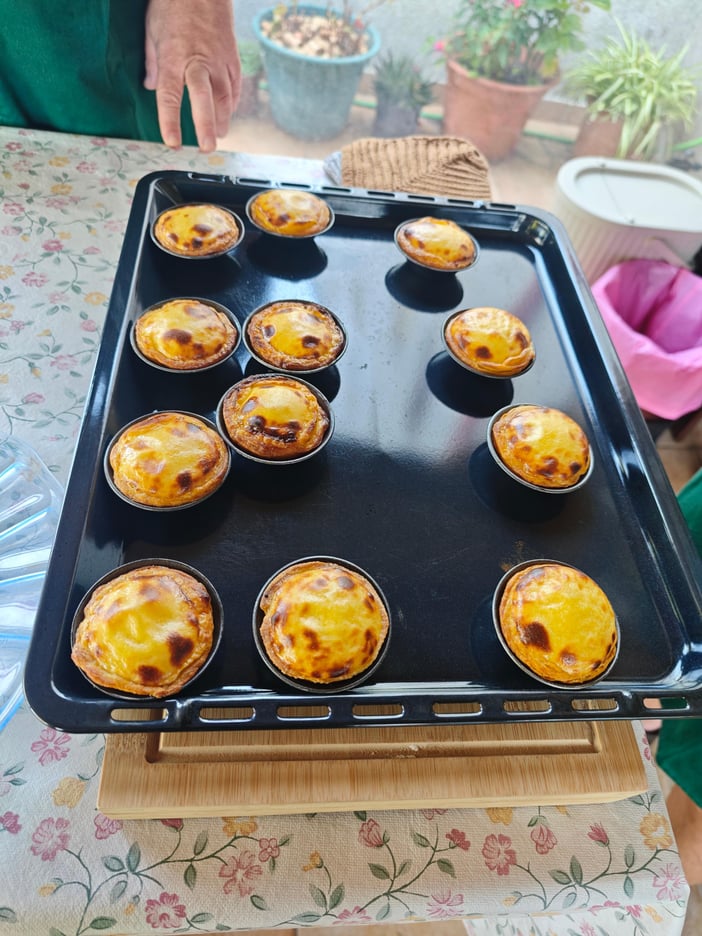
Isabel & Jorge were wonderful hosts. The class was well organized with clear instructions, and their warm welcome made it feel like visiting friends, not a class. Truly memorable, highly recommend!
Most reviewers praise the hosts by name, calling them warm, patient hosts who share tips for the rest of the trip.
Several solo travelers did not expect to leave feeling like they had spent the afternoon baking with friends.
Several reviewers wished they had booked earlier in their trip, saying a last-day class left them wanting more.
the 3:30 to 6 pm slot fits lanche
Choose a date on the calendar and then a start time. Most classes here run about 1.5 hours; the workshop and cruise combo takes 3.5 hours, so leave the whole morning or afternoon free.
Some classes list several versions on the same page. The Port wine class runs at two addresses: a spacious, air-conditioned spot near Lapa Church, and a traditional store on Bainharia Street near the Sé.
Reserve your places and pay through the checkout. Every class on this page lets you cancel up to 24 hours in advance for a full refund, so an early booking stays flexible.
A confirmation arrives by email after payment. For the class paired with the Douro River cruise, the final vouchers come by WhatsApp instead, so keep that number handy and check the chat.
Wear flat, closed-toe shoes, since Porto studios keep open sandals out of the kitchen. Aim to arrive about ten minutes early and find the entrance before your start time.
tawny port balances the sweet custard best
Real laminated dough needs more than five hours of resting and folding, so most classes work with pre-prepared puff pastry and focus your hands-on time on the custard filling and the bake. You still get the full pastry recipe to try at home.
These are shared classes where you take turns on the steps of the recipe under step-by-step guidance. If you want to do every stage yourself, one operator offers a private workshop option. Ask the instructor questions as you go; that is part of the format.
Some classes pour each adult a single glass of Port while the tarts bake; others keep Port, water, juice and coffee available throughout the session. Coffee, tea and juice are standard alternatives, so nobody has to drink alcohol to join in.
Portugal sets the legal drinking age at 18, and one of these workshops serves its wine or Port only to participants aged 21 and over. If you are between 18 and 21, or travelling with someone who is, check which rule applies before you book.
Plan for about 1.5 hours from apron on to last tart, though a bigger group can stretch a session to two hours. The workshop and cruise combo runs 3.5 hours in total, with the baking itself around 2.5 hours.
Baking around a shared table turns the waiting time into a break for chatting, and groups stay small enough that conversation comes easily. Solo travelers use these workshops as an easy way to meet people without joining a big tour.
Classes stay small and sociable. One studio caps sessions at 20 people across three work stations with two instructors, and another runs in a host family's apartment. Smaller groups mean more turns at the dough and more time to ask the instructor for Porto food tips.
Every pastel de nata class here lets you cancel up to 24 hours in advance for a full refund. If a flight shifts or plans change the day before, you lose nothing.
Kitchens in Porto follow Portuguese food hygiene rules, and workshops require flat, closed-toe shoes. Sandals and flip-flops stay in your bag, so pack a pair of sneakers for class day.
A standard session yields about five pastéis per person: eat roughly three warm from the oven and pack the rest in the box provided. Every class sends you home with the recipe too, so you can bake them again once your trip ends.
Age rules differ from class to class: one welcomes ages 3 and up with stroller access, another takes children over 10 only, and the host-family class lets kids attend with their parents. Check the age line on the class you pick before booking.
Vegan, gluten-free and lactose-free versions are possible on request, and the vegan class uses entirely plant-based ingredients. Advance notice is mandatory so the kitchen can prepare, so mention your diet at the time of booking, not on arrival.
ask whether the dough is premade or from scratch
Porto can hand you a custard tart on any corner, but a class that pours the Port while the tarts bake is a rarer booking. One such afternoon deserves planning, from choosing the workshop to carrying the box home.
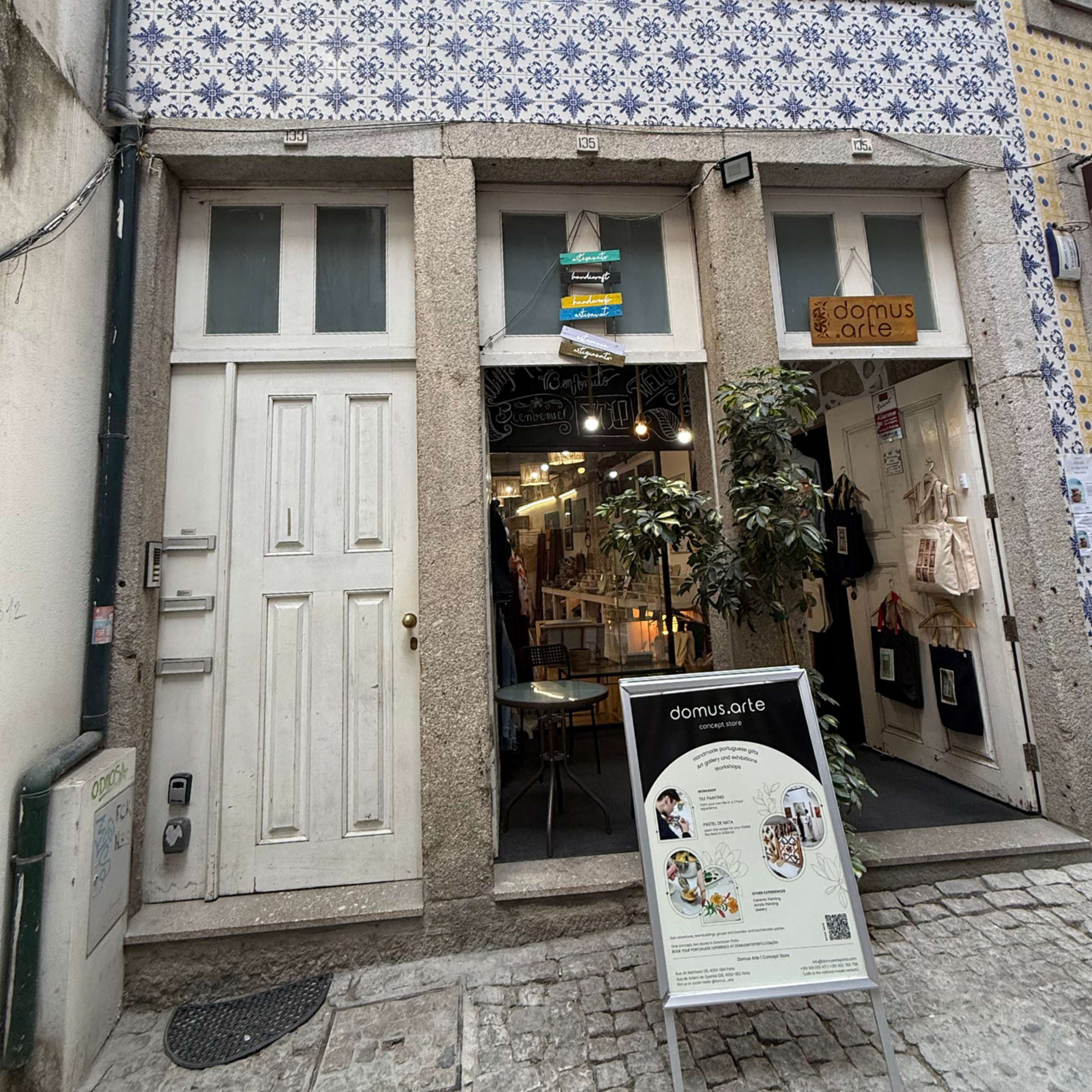
Book the late-afternoon slot: the 3:30 to 6 pm lanche window is where warm tarts and Port genuinely belong.
Cancel up to 24 hours ahead for a full refund, because late arrivals at some venues get turned away with no refund.
Wear flat closed-toe shoes; sandals and flip-flops stay outside the kitchen.
The tart itself is simple to describe: flaky pastry wrapped around a sweet egg custard, best warm. Getting one is easy. The question is whether you want to watch or to make.
Across the river in Vila Nova de Gaia, the wine cellars run tastings, flights and guided masterclasses, and you stand and listen. A cooking class with wine works differently. You take turns making the custard and filling yourself, guided step by step, and the wine and the talk about Portuguese food run alongside the work.
On a walking food tour, by contrast, you cover three or four hours of steep streets with ten to fifteen people, and Port usually shows up once, as a single glass at one stop.
| A nata cooking class with Port | A Gaia cellar tasting | A walking food tour | |
|---|---|---|---|
| Your role | You make the custard and shape the tarts in turns | You taste while the host explains | You walk, stand at counters and taste |
| Time on your feet | Under two hours at a bench and table | About an hour, mostly standing | Three to four hours on steep cobblestones |
| How much Port | Served during the baking pause, often with coffee and juice alongside | Whatever the flight or masterclass pours | Usually one glass at one stop |
| Suits | People who want to cook, sit and talk | People who want to sip and listen | People who want variety and city context |
For anyone who wants to work at a bench and stay put, the class is the right afternoon.
The session runs about 1.5 hours from apron to first bite, and a big group can stretch it to two. Groups where the class also teaches full dough lamination run closer to 2.5 hours.
The first surprise comes early: the puff pastry is already made. That is not a shortcut to sniff at.
Real lamination takes more than five hours of folding and resting, so the host prepares it in advance and hands you the house recipe to recreate at home. Your hands go where the time is, on the custard filling and the baking.
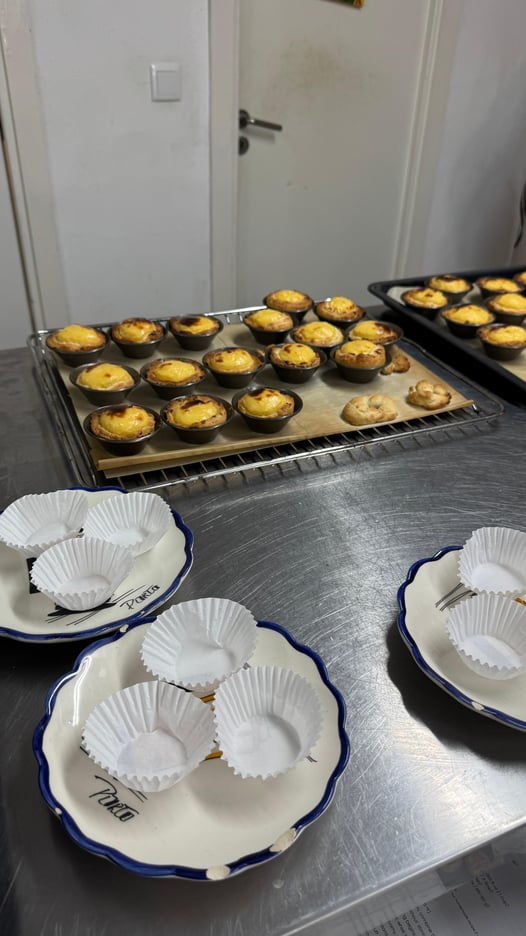
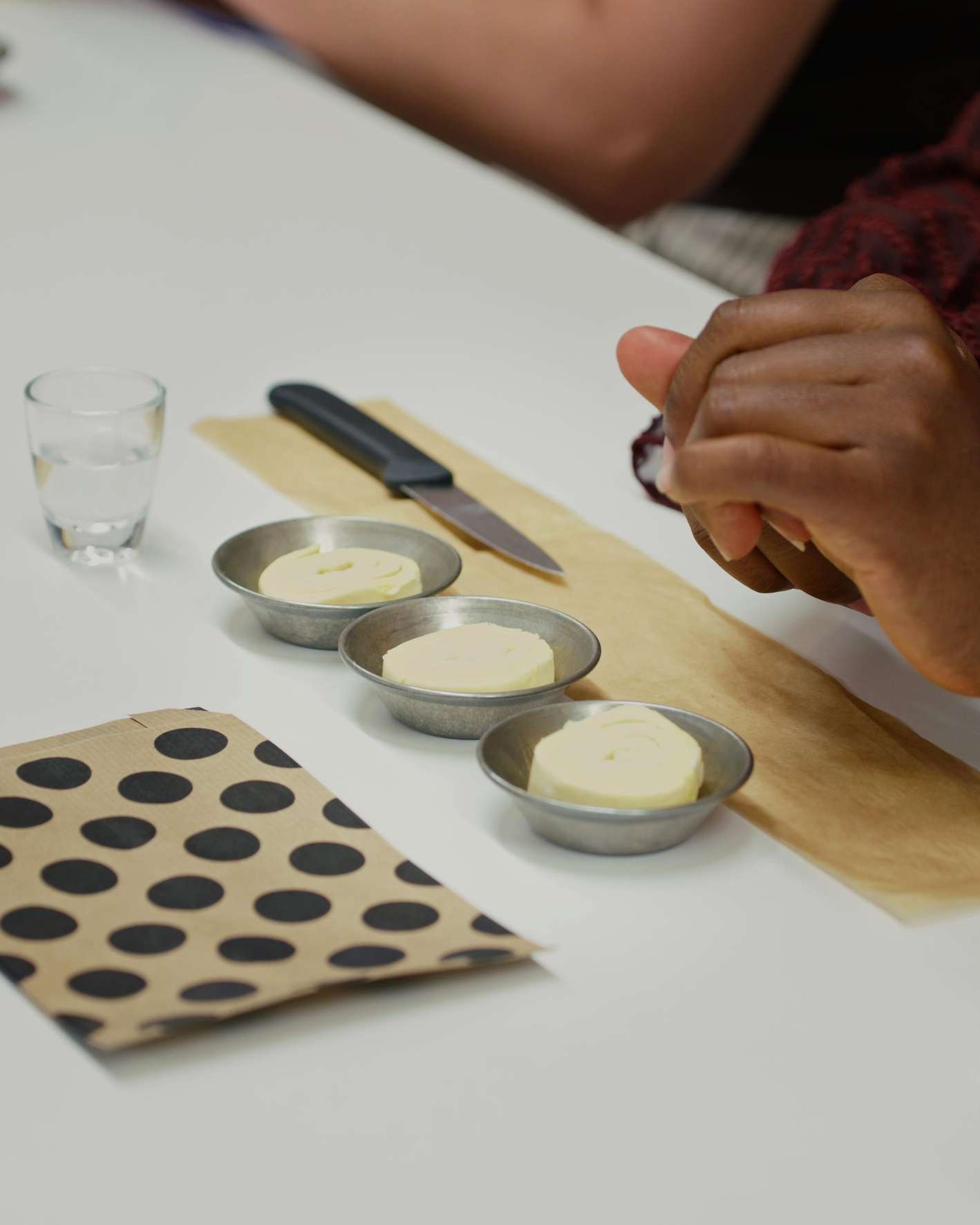
Nobody works alone at a private station. The group takes turns on the steps, sharing bowls and tasks under step-by-step guidance, and everyone shapes several tarts of their own.
A short history of the tart, from Lisbon convent kitchens onward, comes with it
Ask the instructor anything; this is where beginners get their questions answered
Pre-rested dough means the spiral work stays manageable
Time to chat with the group and ask for Porto food tips
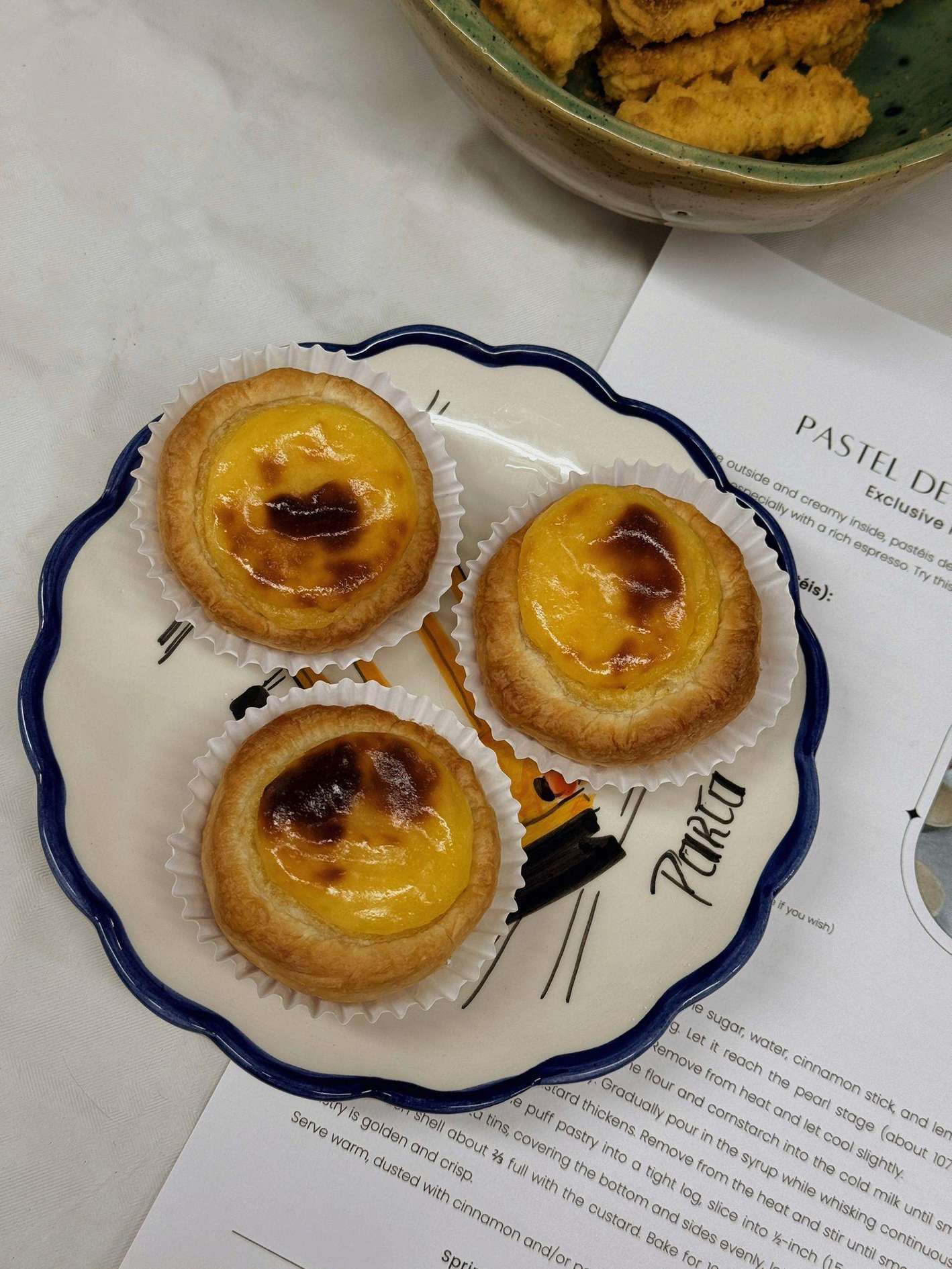
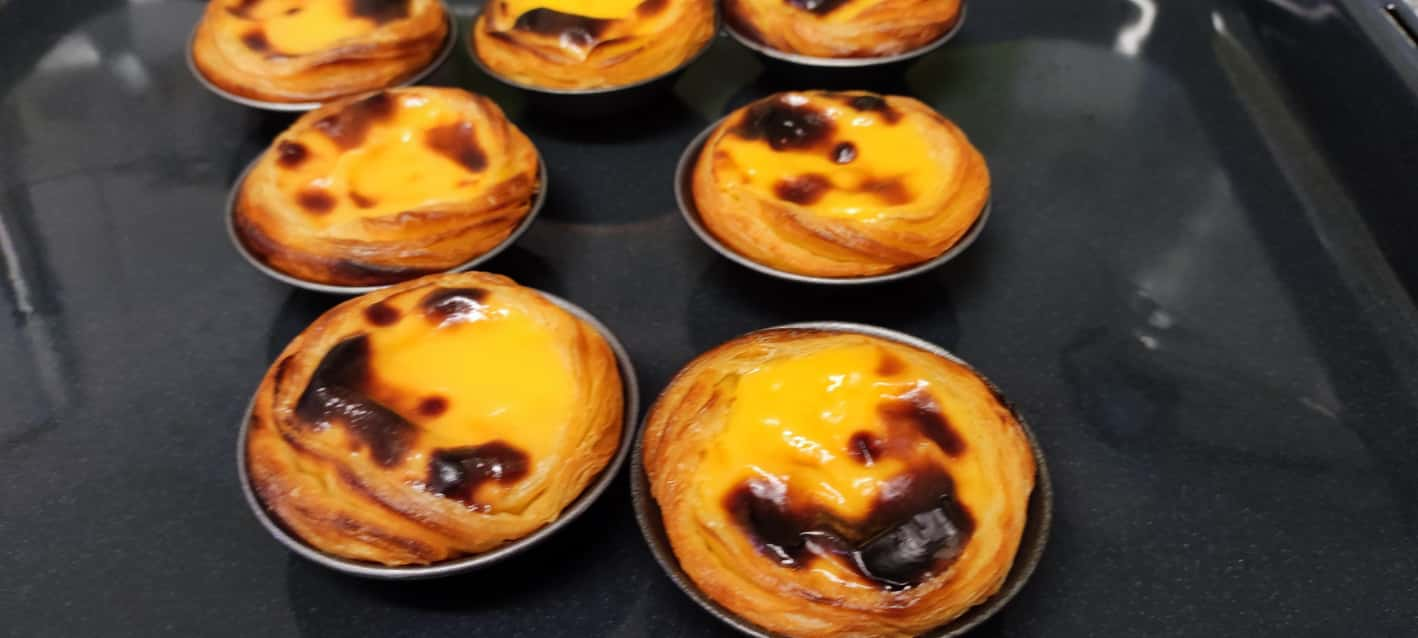
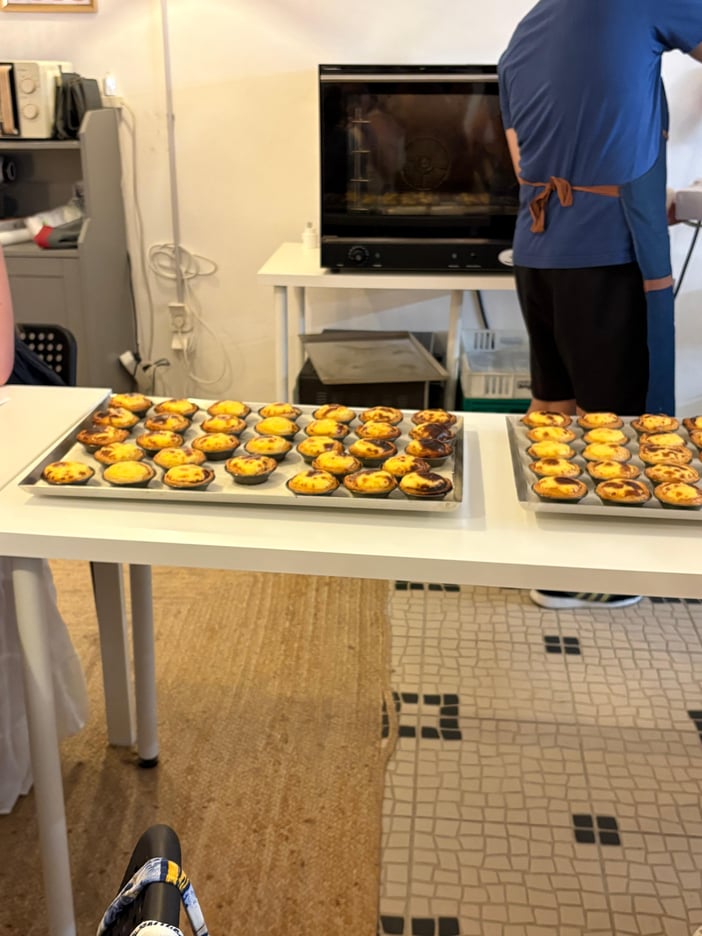
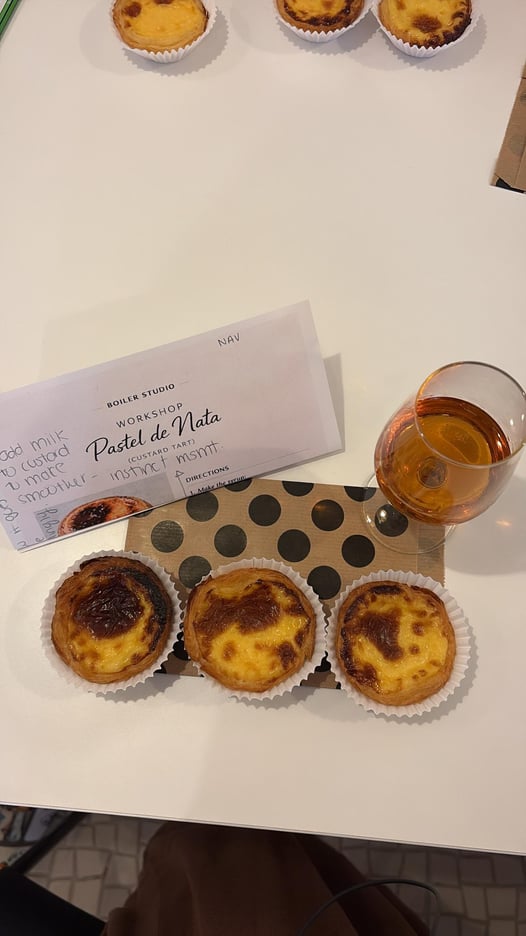
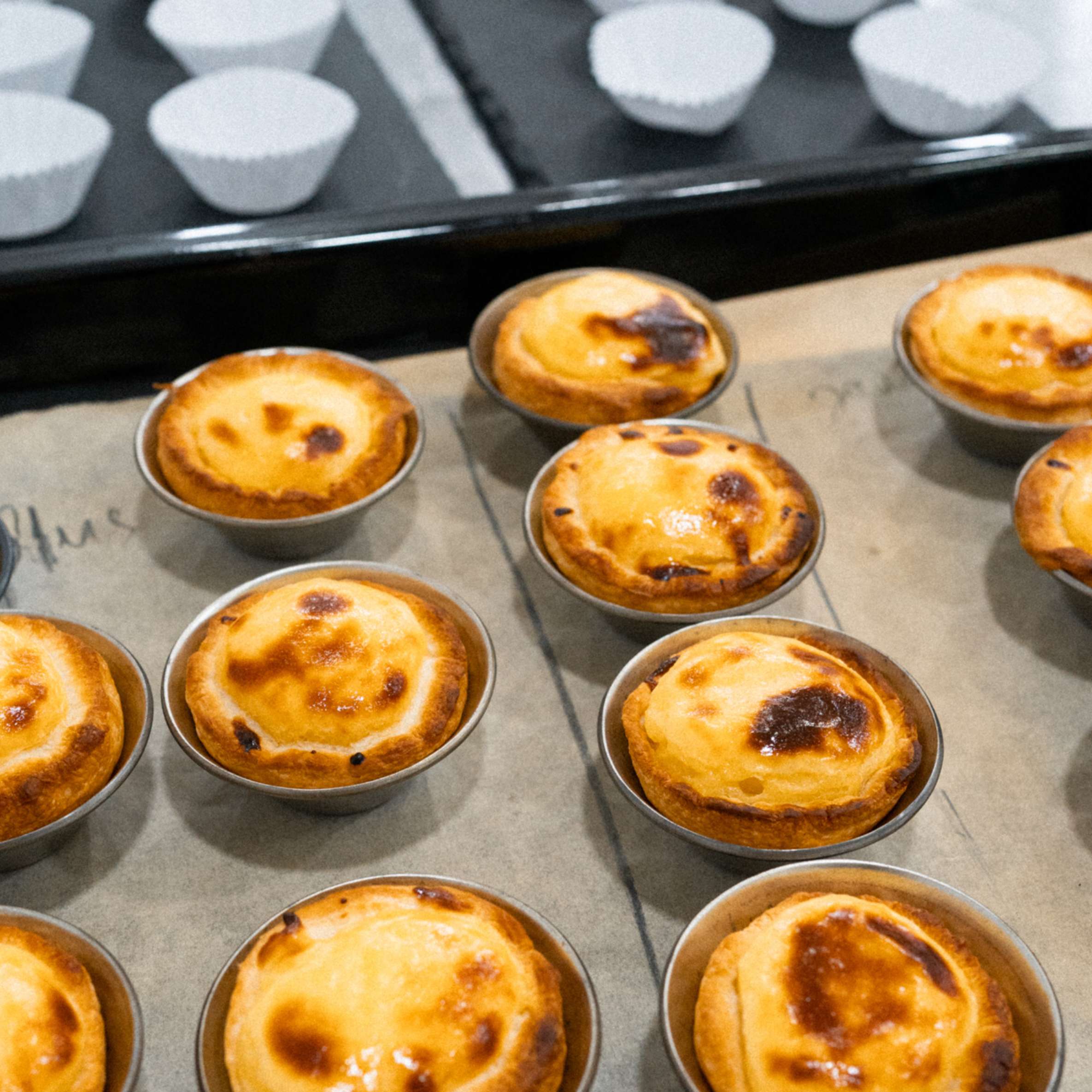
Dark caramelized spots on top are the sign it worked
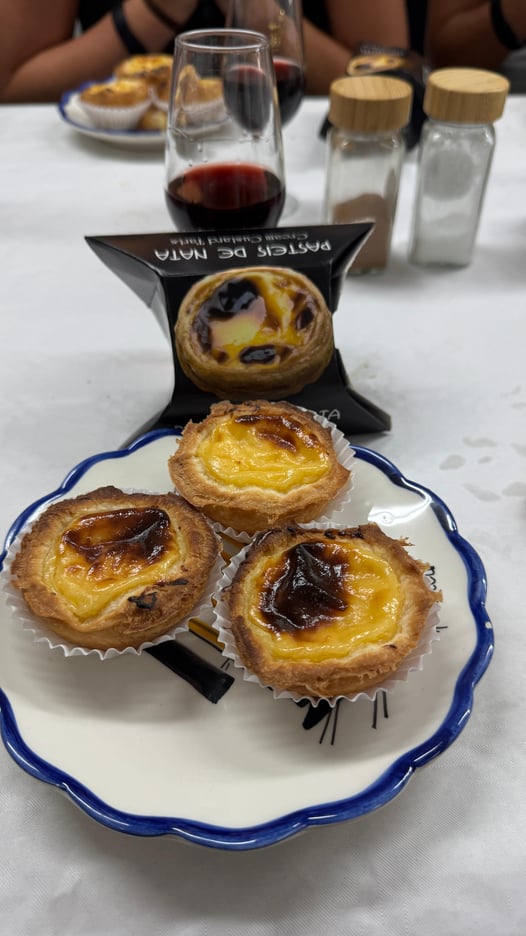
The pause is the part people remember. On the Pastel de Nata Cooking Class with Port Wine, the drinks, the paper box and the exclusive recipe for tarts and puff pastry are all included, and the instructor carries the history lesson along the way.
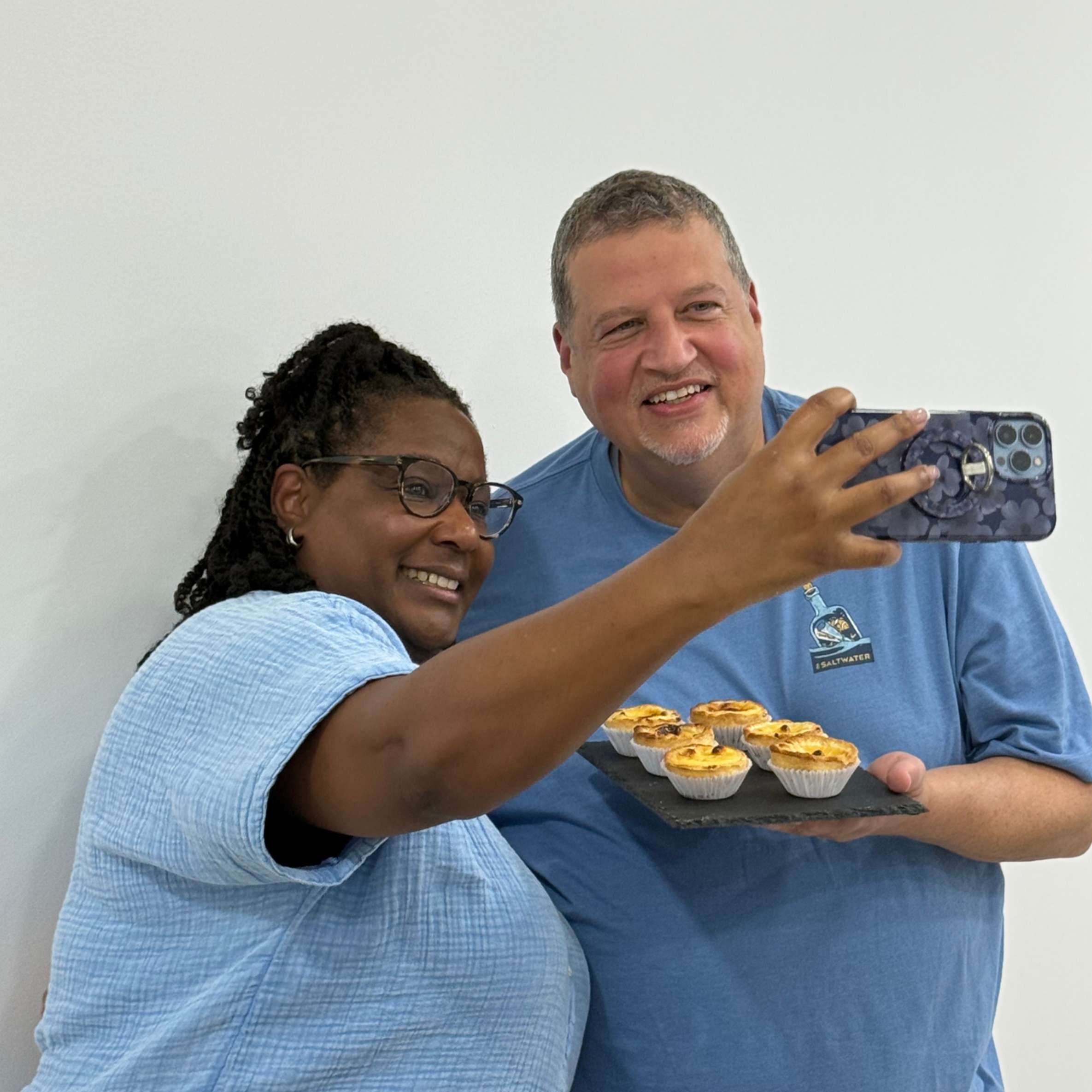
Ask for the tawny. Tawny Port balances the sweetness and the egg-rich custard best, and it is the glass you want when the trays come out.
How much you get depends on the house: some classes serve one glass per adult with coffee, tea or juice beside it, while other workshops keep the Port, water, juice and coffee freely available through the session. Nobody who skips alcohol goes thirsty.
The ritual matters as much as the pour. Taste the tart plain first, then decide whether cinnamon or powdered sugar belongs on it; both are optional. And if you order coffee at a counter afterwards, the local word for an espresso is cimbalino. Say it and you have already half-belonged.
Porto itself has softened its relationship with Port. Producers and bartenders pushed cocktails such as the porto tónico because younger drinkers had drifted away from the traditional glass, and the mix caught on as a lower-alcohol answer to the gin and tonic.
Its white port base sits around 16 to 20 percent alcohol, so it suits the gap before a late dinner. Summer pop-up bars around the city do the same job the class does: Port with something light beside it.
It is the style that stands up to sweet, egg-rich custard
Cinnamon and powdered sugar are optional; decide after the first taste
It is the local word for espresso, and counters will know exactly what you mean
White port runs 16 to 20 percent, so it suits the gap before a late dinner
None of these tricks needs practice; they are simply how the pairing is done here, and they cost you nothing.
The Portuguese eating day answers this for you. Lunch is a substantial sit-down affair between 12:30 pm and 2 pm, and dinner rarely starts before 8 pm, which leaves a long afternoon gap. That gap has a name, lanche, and it runs roughly 3:30 to 6 pm.
A morning tart is a counter thing: a warm pastel with an espresso, standing up, before the day gathers pace.
Put a rich fortified wine in front of someone an hour before a big lunch and the pairing feels heavy. The 3:30 to 6 pm slot is where warm tarts and Port genuinely fit, bridging the hours until dinner.
Morning tarts pair with espresso before lunch
Dedicated to a full cooked meal
Ideal window for warm tarts and Port
Local kitchens open late for evening dining
The walk to class is its own consideration in high summer. From July through September, central Porto averages daytime highs of about 25 to 24 degrees, dropping to around 23 in September, and July and August are especially dry, so a sunny stroll to the studio can feel warm.
The ovens add their own brief heat at the end: pastries come out hot, so let them cool before the first bite.
August: 5 out of 5 for how busy it gets.
Tap a month to read it.
August and September are the busiest months, which is worth knowing if you like a quiet room, and the winter months sit at the other end of the scale. For the pairing itself, book late afternoon and leave the morning tarts to the café counters.
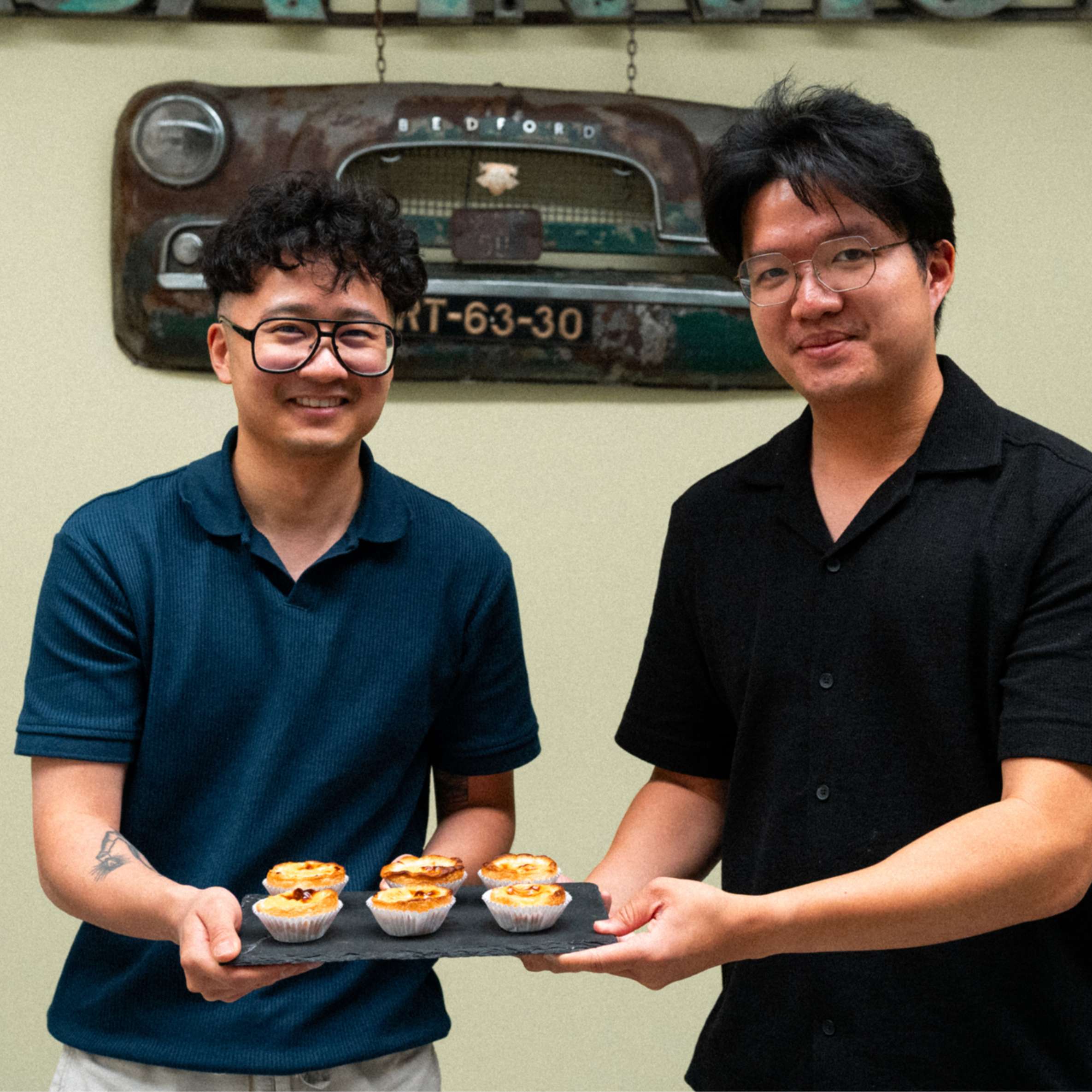
Five checks separate a good booking from a disappointing one, and none of them need a phone call.
First, is the class truly hands-on or demonstration-led? Second, which steps will you personally practise, because some sessions share the work in turns while others watch.
Third, the dough question: most two-hour workshops use pre-made laminated pastry, because authentic puff pastry needs more than five hours of resting and folding, while a from-scratch class spends the extra time on dough.
Fourth, the language of the room, which in Porto is nearly always English, with Portuguese, Spanish or French available at some operators. Fifth, whether the instructor leaves room for beginners to make mistakes as they learn the technique.
The Pastel de Nata Cooking Class from Scratch is the version for anyone who wants the full dough work; it runs 2.5 hours, ends with a glass of local wine, and teaches the history and secrets of Portuguese pastry alongside the tart itself.
Beginners do fine in either format when the instructor breaks the laminating into small steps and demonstrates before you try. If your dough tears halfway through a spiral, ask; troubleshooting as you work is part of the deal.
| Check | Why it matters | Our pick |
|---|---|---|
| Hands-on or demonstration | Only hands-on gives you the custard and shaping in your own hands | Fully hands-on; the group takes turns on shared steps |
| Which steps you practise | Some classes skip the hard parts | Custard filling and baking are yours; pastry arrives pre-made |
| Premade or from-scratch dough | Real lamination needs over five hours, so shortcuts are normal | Pre-rested dough, with the house recipe to take home |
| Language of instruction | You need to follow the guidance as it happens | Conducted in English |
| Time for beginner mistakes | Rushed classes push you toward perfect tarts | Small, guided steps with help on hand |
Run any class on the page against those five rows and the right booking picks itself out quickly.
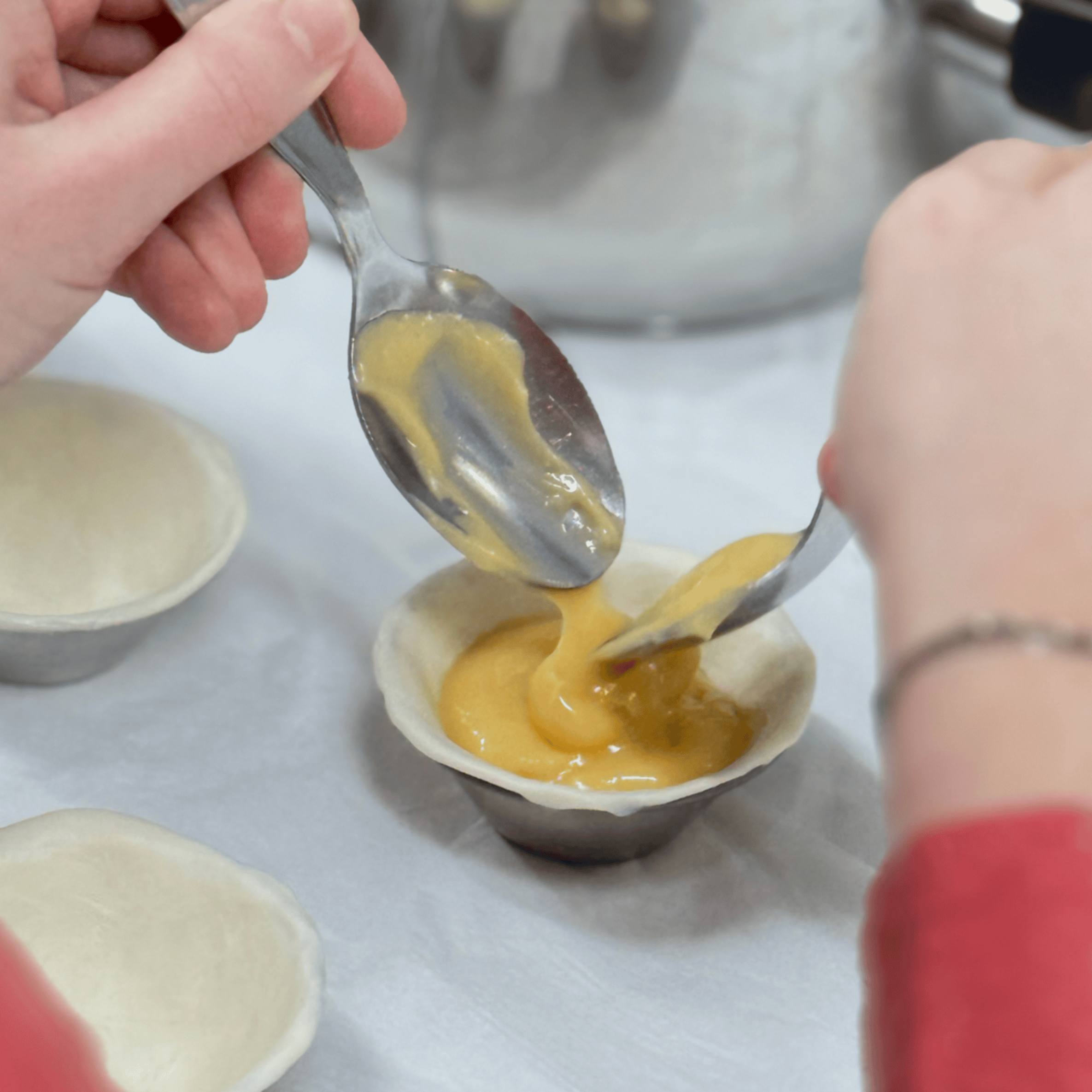
Plant-based visitors have a genuine class of their own in Porto. The Vegan Pastel de Nata Cooking Class with Port Wine uses all vegan ingredients and materials, runs the same 1.5-hour format, and pours Port wine, juice, water and coffee alongside the snacks. You learn the plant-based techniques for custard and pastry with step-by-step guidance.
Texture is where the honest note comes in. Starches in an eggless custard deliver the thick, silky quality you expect, and the pastry crisps as the custard sets.
The recipe author himself admits it is not truly authentic without eggs; it comes close to the original without fully matching it. At other operators, lactose-free and vegan versions run on request, but advance notice is mandatory so the kitchen can prepare.
Allergy travelers need sharper lines. Egg and dairy allergies depend on the class: some operators can adapt with notice, while certain classes are simply not suitable for people with food allergies or lactose intolerance, so check before booking rather than hoping on the day.
Celiac disease is different in kind. Flour hangs in the air during any baking session, and people with celiac disease are advised against breathing it in; particles can stay airborne for 12 to 24 hours, long enough to contaminate anything gluten-free prepared nearby.
A flour-dusted kitchen is not the place to test your sensitivity. And one more wrinkle for strict vegans: Port wine itself is not typically vegan by default, because traditional production often uses animal-derived fining agents, though many bottle-aged and vintage Ports are bottled unfiltered and unfined.
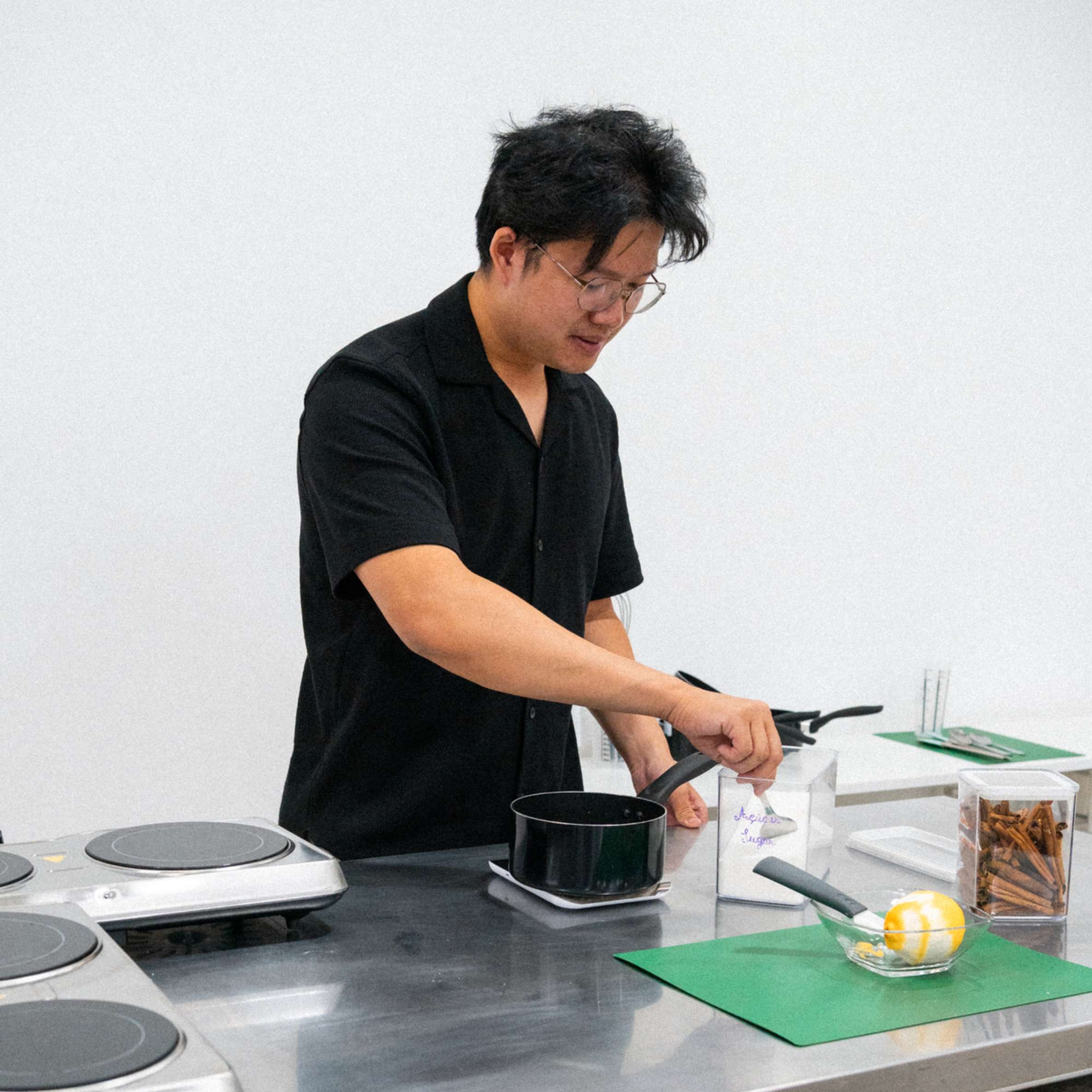
Families assume too much, so here is what actually holds. Age rules vary class by class: some welcome children only from 9 or 10, one pushes the minimum to 15, and one operator welcomes all ages.
Some classes take children only when accompanied by their parents, and certain sessions ask for kids under 15 to book as a private group.
The wine has its own line. Portugal's legal drinking age is 18, and no establishment may serve alcohol to anyone younger, so a child sits at the table and drinks the juice, coffee or tea while the adults get the Port.
The wine being present does not keep minors out; Portuguese law lets children enter food and drink establishments, and no rule forces anyone to drink to be there.
Two corrections before you book. First, not every child makes a full batch: classes often run as shared turns, so a small child works on steps of the recipe with the group rather than baking six tarts solo.
Second, a short 1.5-hour session tends to suit children better than a longer course, but some classes state no age policy at all, which is worth checking before you promise a five-year-old a baking afternoon.
Minimum ages run from under 3 exclusions up to 15, and they differ per class
Minors may enter food and drink venues; only the alcohol itself is off limits
Portuguese law allows entry; the venue just cannot serve them alcohol
Most classes share turns on the steps as a group effort
Clear those four up and no family arrives at the door with the wrong expectations about who bakes and who sips.
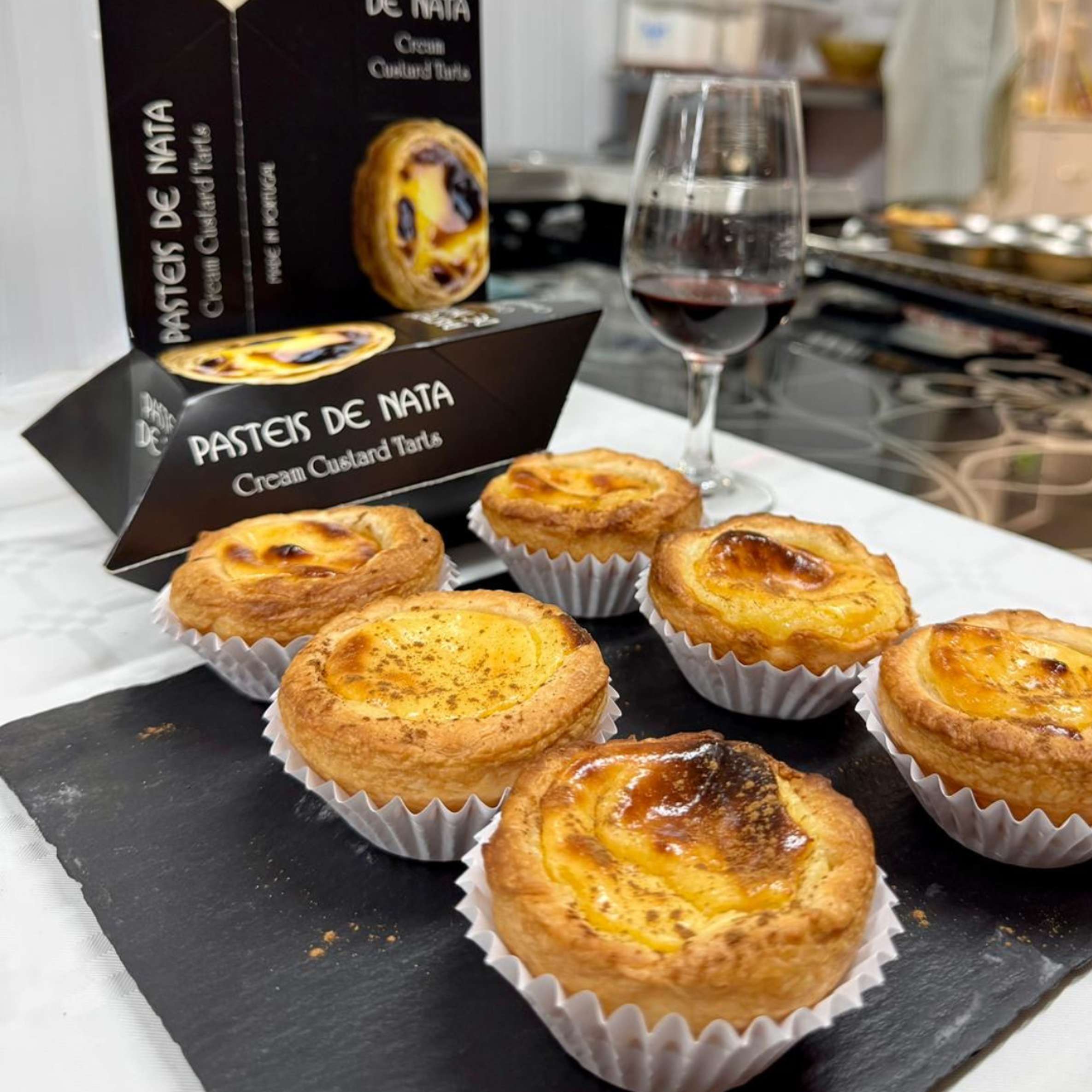
Most sessions sit within easy reach of the center, and the metro does the heavy lifting. From Trindade, the main interchange, a class near Mercado do Bolhão is a two-minute ride or a 600-metre walk of about seven minutes.
Bolhão is the first stop east of Trindade, served by lines A, B, C, E and F from the same platform, and the station sits directly beneath the market with direct access into the building.
Venues near the cathedral and Clérigos ride Line D, the yellow line, to Aliados or São Bento, both a short walk from the meeting spots. Buses on the STCP network also serve Av.
Aliados, Bolhão and Cordoaria. Guided food walks tend to gather at the market entrance or the Capela das Almas, which tells you where the foot traffic already flows.
The one journey to plan for is a home-hosted class. Reaching the pastel de nata class at host Joana's apartment takes about 30 minutes from central Porto by metro or rideshare, so build that into your afternoon rather than discovering it at 3:20 pm
Match the route to your starting point and hotel, and the last stretch to class stops being a gamble.
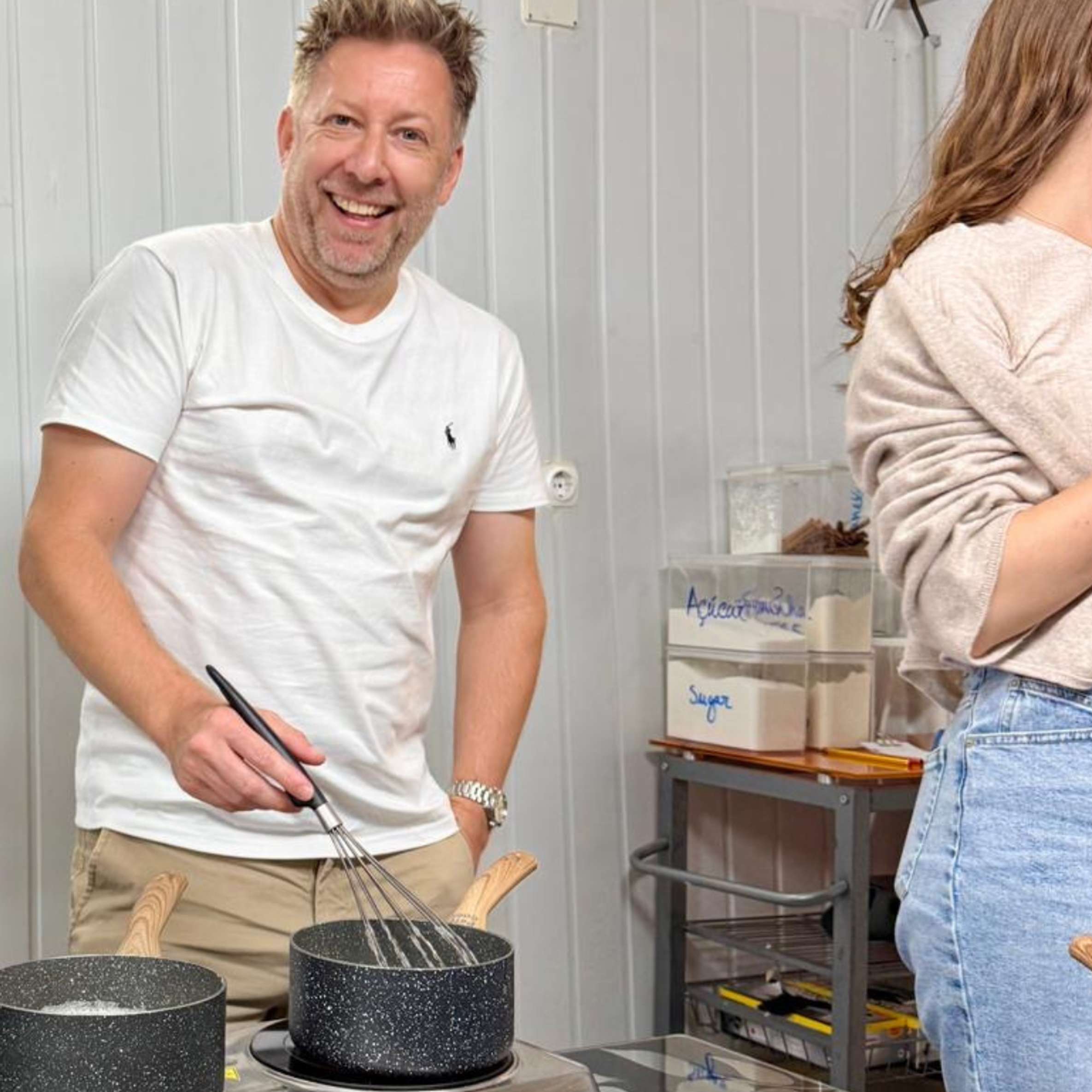
One rule has no exceptions: flat, closed-toe shoes. Cooking workshops across Porto mandate them near the hot pastry ovens, and open-toed footwear, sandals and flip-flops are banned outright.
Tie long hair back, roll or wear fitted sleeves so nothing drags across liquid custard or an oven door, and expect to stand on hard floors for the length of the session.
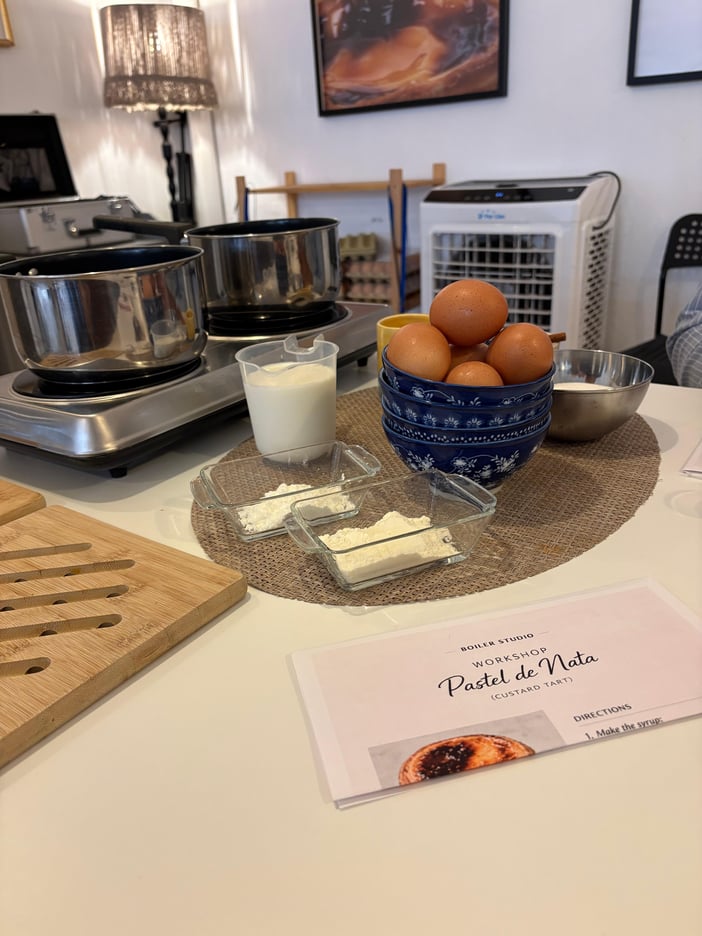
Everything else is provided. Equipment, baking utensils and raw ingredients come with the class, and bringing your own tools or ingredients is unnecessary at best.
Most studios hand out aprons on arrival, though some home-based classes suggest you bring your own, and comfortable casual clothes you do not mind dusting with flour are the whole dress code.
While the tarts bake, the instructor usually explains the gear, including why the tins are slanted metal. Metal conducts heat far better than silicone, which is what browns and crisps the pastry; a non-stick coating is unnecessary because the high-fat crust does not stick.
The same physics explains the heat: bakeries exceed 250 degrees so the top scorches into dark spots before the custard splits, and at home you chase the same effect at 250 to 260 degrees with the fan setting on.
That is the detail the recipe card will ask of you later.
Everything on that checklist fits in a pocket or a suitcase pocket, so the kitchen rules never cost you a booking on arrival.
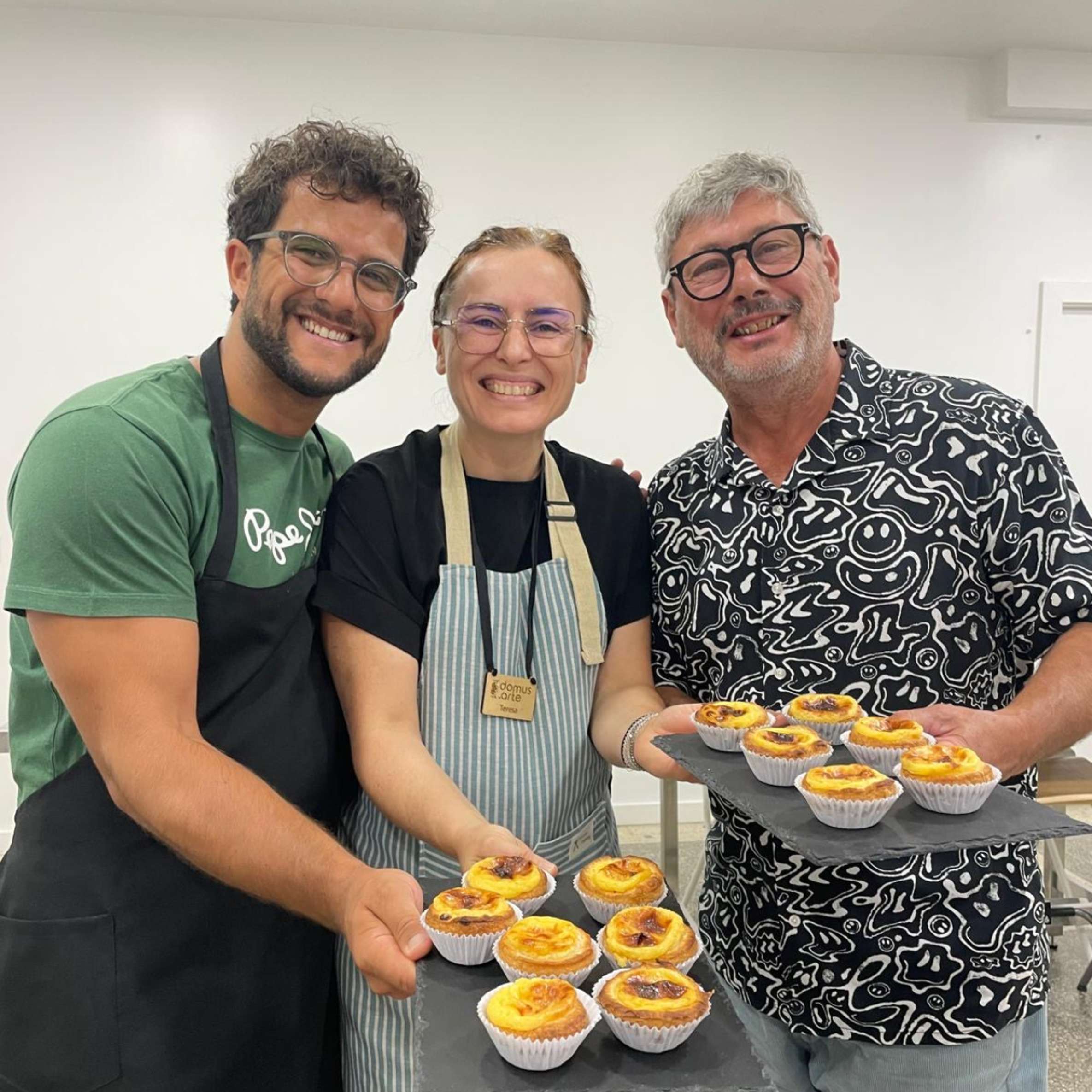
The edge cases are worth hearing before you book, not after. At some workshops, doors close at the scheduled start time: late entry is refused, with no rescheduling and no refund.
At one operator, participants simply cannot join after the class has begun, and rescheduling is possible only within the cancellation period. A third operator takes the softer line; staff try to slot latecomers in without disturbing the others, and if that fails, they aim for another time.
The standard terms across Porto's tours are clear: cancel up to 24 hours in advance for a full refund. So if a flight wobbles, cancel early rather than arriving an hour into the session and hoping.
Weather, mercifully, is not one of the variables. Classes run regardless of rain, and nothing about the session depends on the sky, since the whole event happens indoors. A wet Atlantic day outside changes nothing about the pastry inside.
| If this happens | What happens then |
|---|---|
| Plans collapse | Cancel at least 24 hours ahead for a full refund |
| You are running late | Some venues shut the door at start time with no refund, while one host will try to fit you in or move you to another time |
| You need to reschedule | Usually only possible within the cancellation window |
| Weather turns | The class runs regardless; the session is indoors |
The practical takeaway is buffer time. Book a slot you can comfortably walk to, and treat the 24-hour mark as the real decision point.
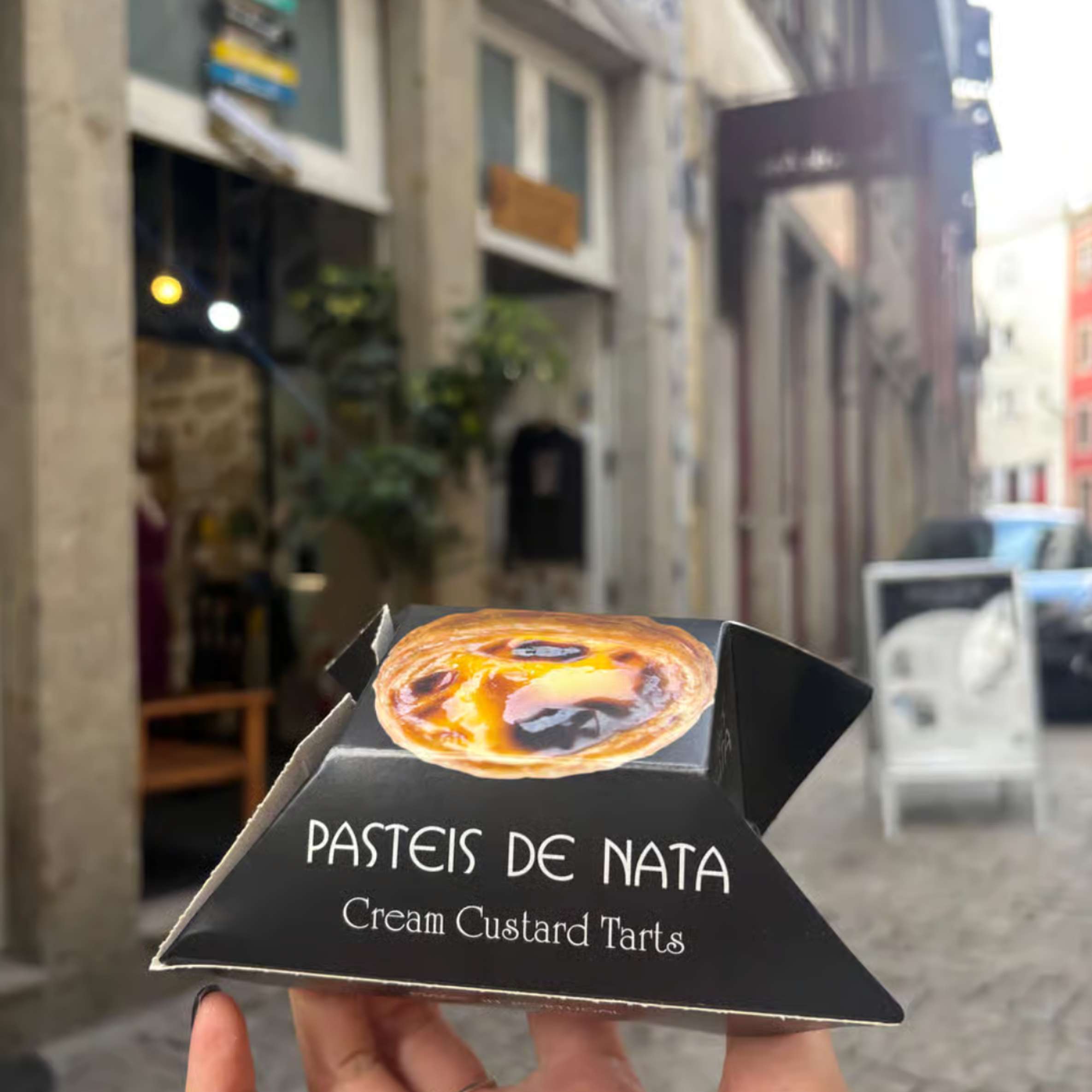
Count the takings honestly. A standard workshop bakes about five tarts per person: three eaten warm in the room and two or three packed to go. The box comes with the class, and the shops' takeaway boxes keep the tarts good to eat for up to two days.
The recipe is the durable part. Porto baking classes typically hand over a printed or digital recipe card for both the tarts and the puff pastry, and some instructors go further, recommending flour brands you can find outside Portugal.
The box of pastéis goes straight through airport security in your carry-on on flights leaving Porto, so the leftovers travel as well as the recipe.
A great baking class with a lovely group, we chatted and baked together, which made the recipe easier to understand. My homemade pastel de nata were super tasty; I'll definitely bake them again! 😋
There is also the social yield, which solo travelers rate highest. Baking alongside other travelers in a cozy setting is a natural way to meet people; the small group, the shared turns and the drinks during the bake give everyone an immediate topic, and the room draws participants from different countries.
It is the easiest conversation starter on a Porto itinerary, and nobody has to commit a full day to get it.
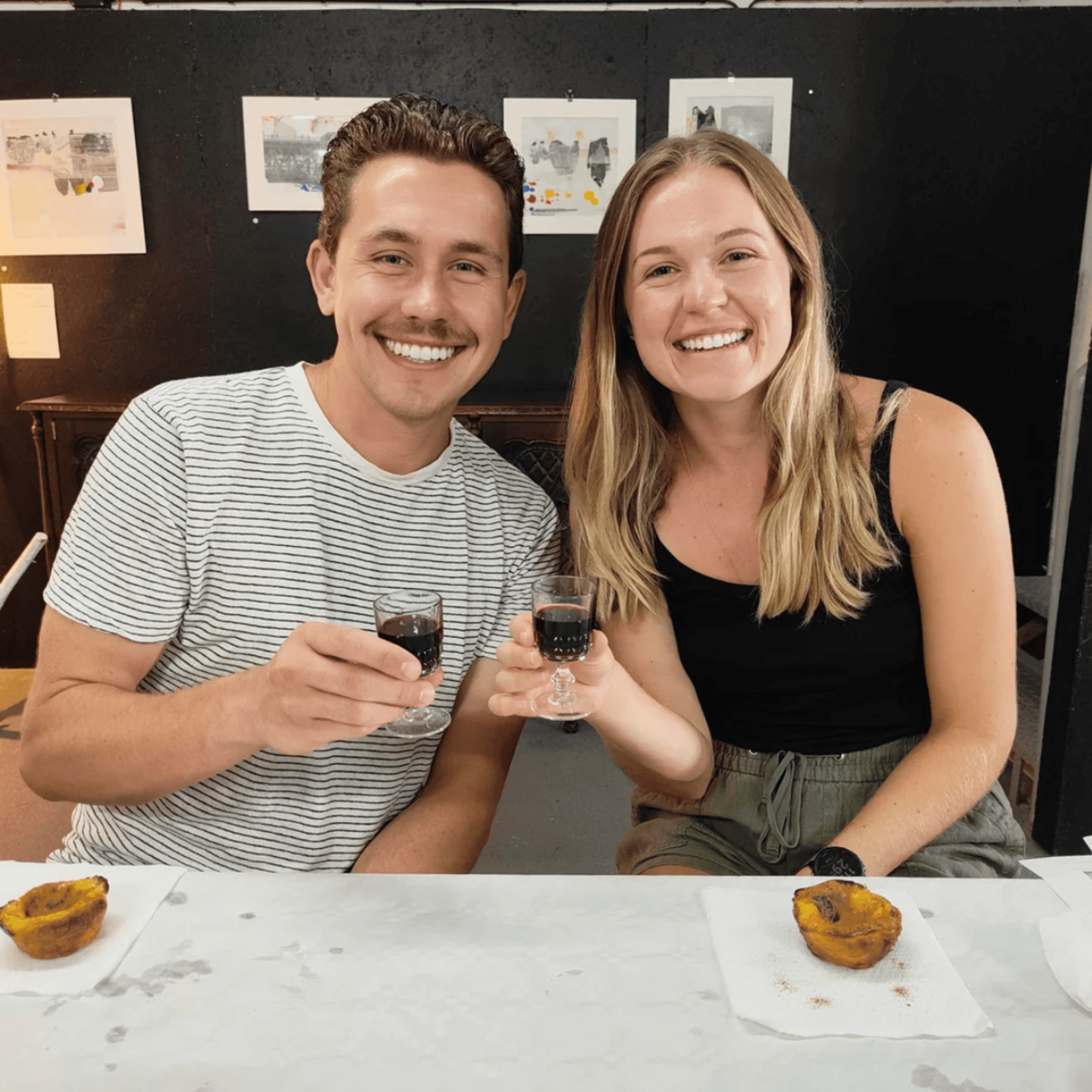
A 3:30 pm class slots into a full day if you build it right. Tascas do lunch, and their daily specials, the prato do dia, often sell out by mid-afternoon, with several authentic spots never opening for dinner at all. So eat your tasca lunch early, then wander.
Mercado do Bolhão rewards an hour, and Confeitaria do Bolhão on Rua Formosa is a historic bakery worth the detour. For a comparison tart, Manteigaria do Bolhão sits near the market, open Monday to Saturday until midnight.
Note that Bolhão's stalls rest on Sundays and public holidays, and Porto's tascas close on different days, some Sundays and some Mondays.
Short sights fill the gaps: Avenida dos Aliados and the Monumento a D. Pedro IV sit within minutes on foot, and Praça Dom João I is two minutes away.
For food before or after, Adega Viseu serves traditional petiscos, Casa Louro does a ham sandwich and wine a five-minute walk from São Bento, and Prova pours wine by the glass.
Eating and drinking around the class stays good value, especially at casual local places away from the tourist strips; tourist-area cafés cost noticeably more. Cash cannot be refused in Portugal, so keep some for the smaller counters.
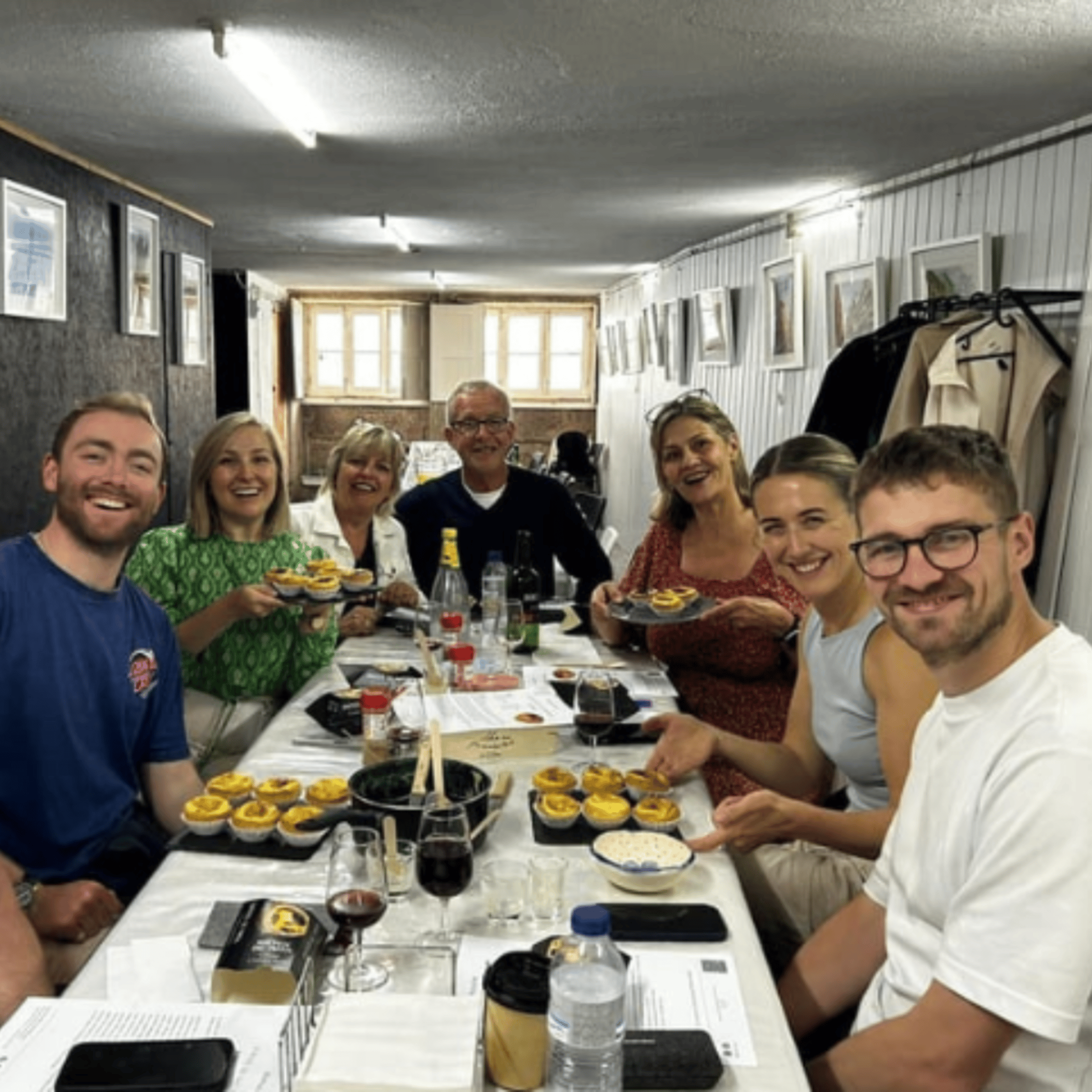
A pastel de nata class with Port turns Porto's two signature pleasures into one relaxed afternoon, and the hands-on work is what makes it worth the slot in your itinerary. Book late afternoon, cancel 24 hours ahead if plans shift, and wear closed shoes.
tawny port pairs best, ask for it
Straight answers on Port wine, dough, kids, and vegans before you book.
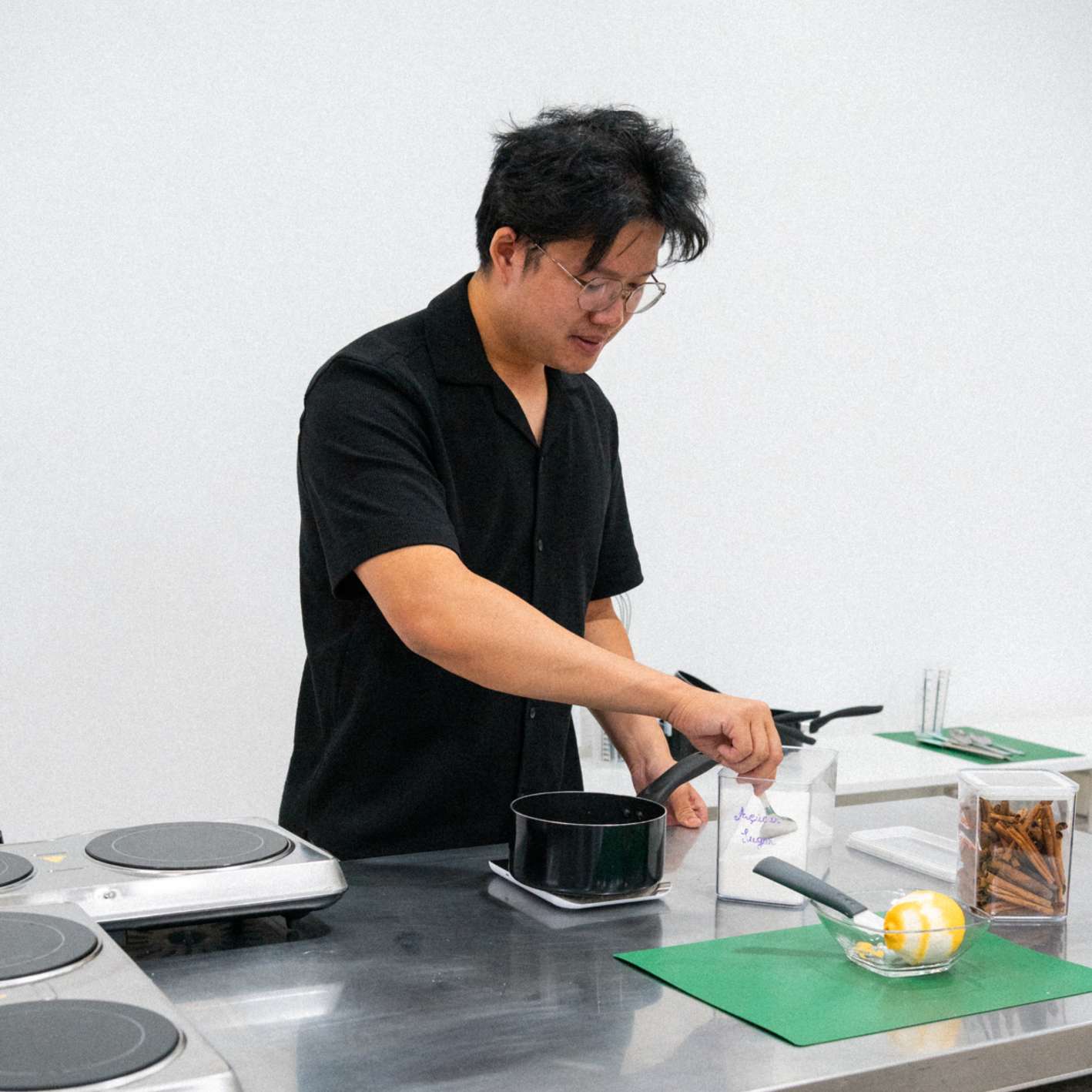 Porto2026
Yes. Most of the workshops on this page pour a glass of Port while your tarts bake, and some keep Port, water, juice and coffee available throughout the session instead of serving a fixed number of glasses.
Tawny Port is the pairing that balances the tart best. Its nutty sweetness stands up to the rich egg custard without drowning out the caramelised top.
Every workshop on this page pours non-alcoholic options alongside the wine: coffee, tea, juice or water. In Portugal you are never required to drink alcohol to enter or take part in a food or drink venue.
It depends on the class. Authentic laminated dough needs more than five hours of resting and folding, so most two-hour sessions work with high-quality pre-made dough and give you the house recipe to try at home. One host-led class has you prepare the tarts from the beginning, weighing and mixing everything yourself.
Classes in Porto run as cooperative team efforts: participants take turns working through the steps of the recipe together under the instructor's guidance. If you want every stage to yourself, ask about a private session when you book.
Ask whether the class is hands-on or demonstration-led, and which steps you will practise. A good instructor breaks the work into small, manageable steps and shows the technique first, so beginners can ask for help troubleshooting the dough as they go.
Yes. Porto baking classes typically hand out a printed or digital recipe card, and some instructors also recommend flour brands you can find internationally.
There is a dedicated vegan pastel de nata cooking class in Porto that uses all vegan ingredients and materials, and one workshop offers vegan, lactose-free and gluten-free options on request with mandatory advance notice. A plant-based custard gets its silky texture from starches, and the pastry crisps as it sets.
Age rules vary by class. One welcomes children from age 3 and is stroller accessible, another invites kids over 10, and a family-hosted session lets children attend with their parents. Alcohol is never served to anyone under 18 in Portugal, so kids get coffee, tea or juice instead.
A food walk runs three to four hours on foot across steep streets, with Port usually appearing as a single glass at one stop. A cooking class keeps you at a bench and table for about 1.5 to 2.5 hours, with less walking and more time making the tarts yourself.
Plan for about 1.5 hours from apron on to first bite. Larger groups can push a session to two hours, and the fuller workshops that add extra steps run around 2.5 hours.
Food walks run three to four hours on foot with ten to fifteen people and several tasting stops. A cooking class keeps you at a bench for two hours or so, with less walking and more making. If you prefer working with your hands over moving between stops, the class wins.
tawny port pairs best with warm tarts
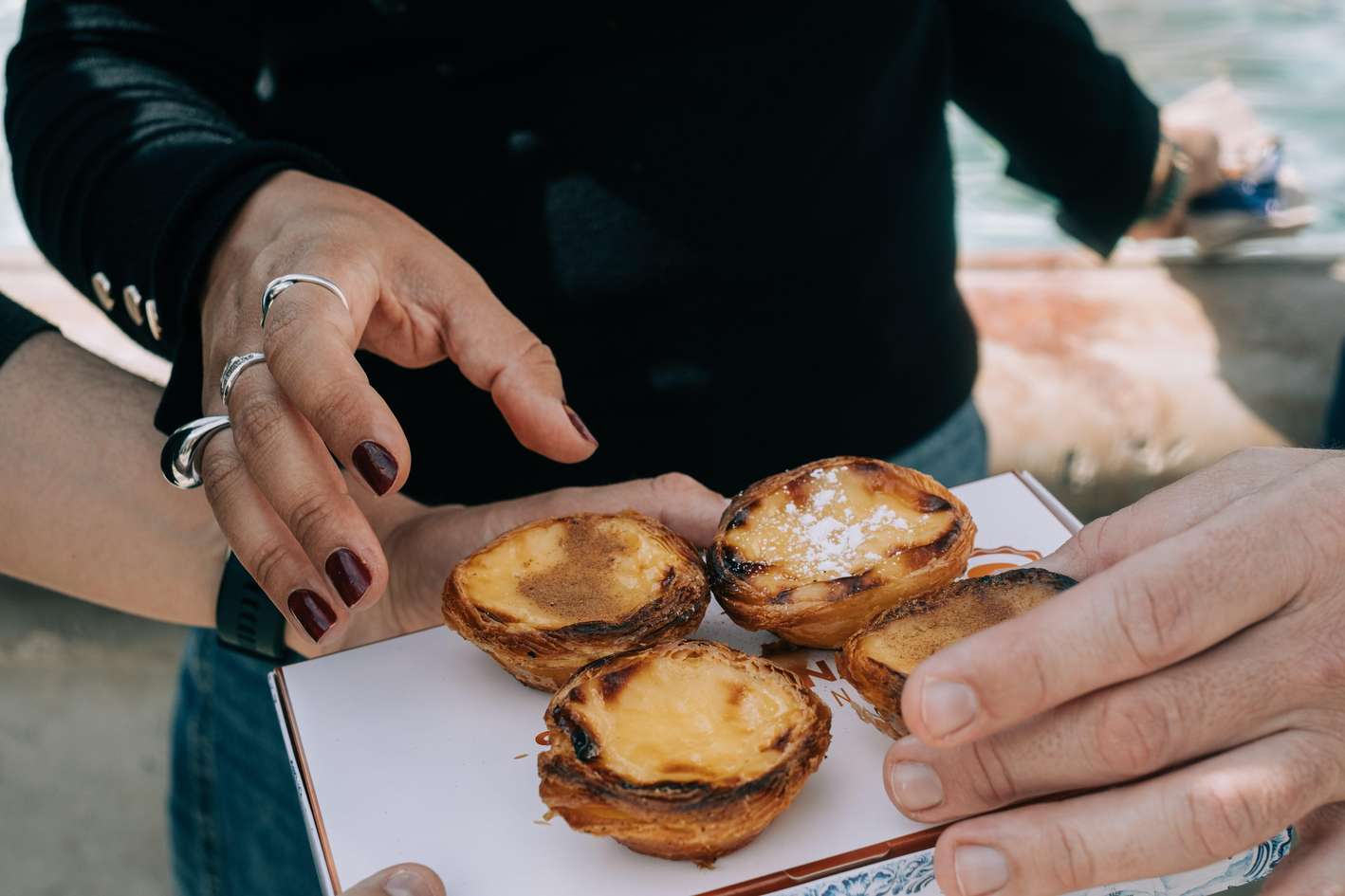
After your tart, follow a guided walk that links several tastings across central Porto in one afternoon.
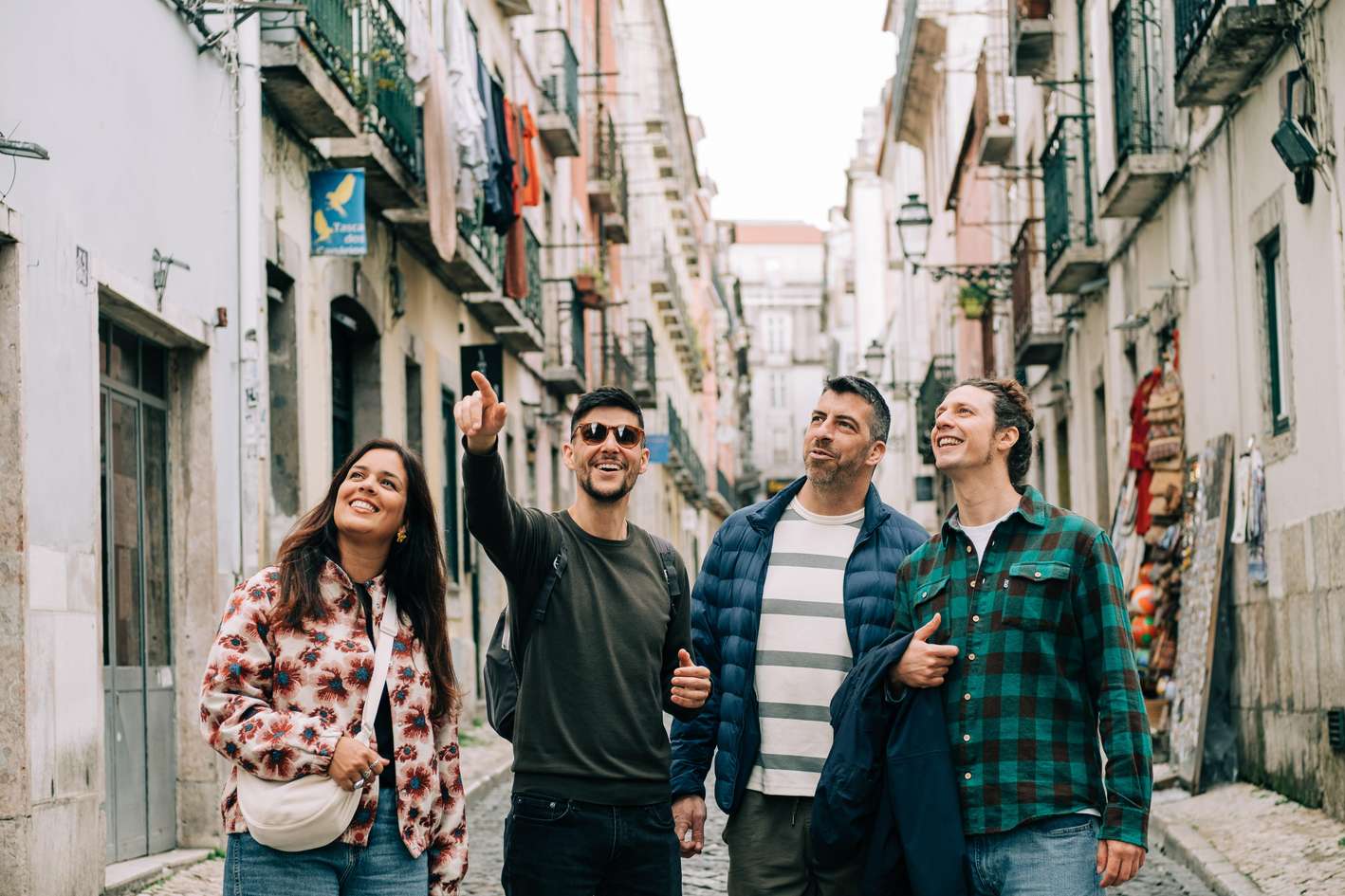
Prefer drinks at every stop? This page covers food walks where local wine and Port sit alongside the snacks.
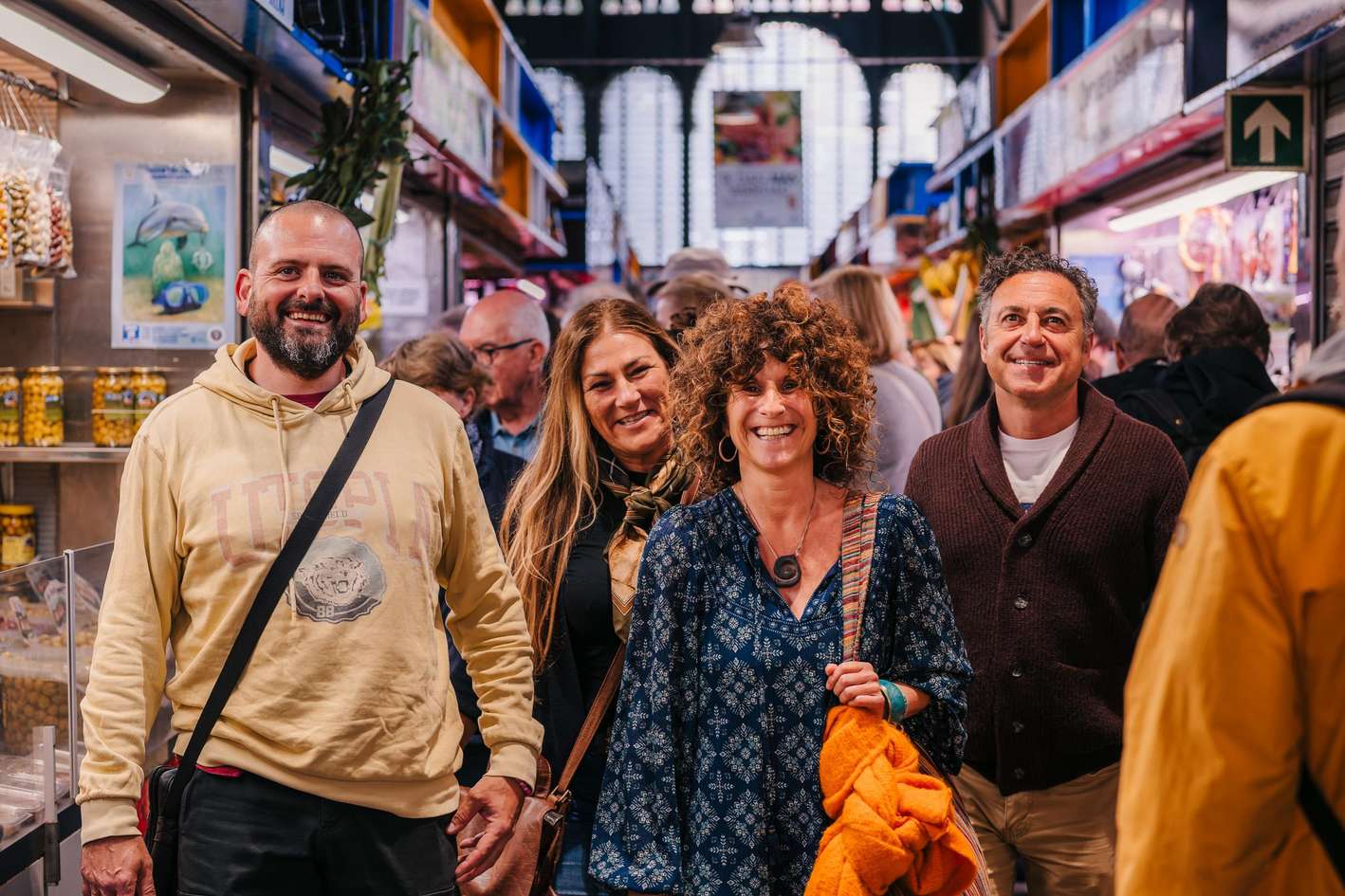
Find the small counters and bakeries locals use, so you can keep eating well between your booked activities.

Pair your baking session with a walk through old taverns and hear how Porto's food history shaped them.

Want the kitchen to yourself? See how a private tart workshop compares with a private tasting route.
Your class sends you home with a box of tarts. This page explains how to keep them good for two days.

Baking tarts is one option. Browse the full range of Portuguese cooking courses in Porto for your dates.
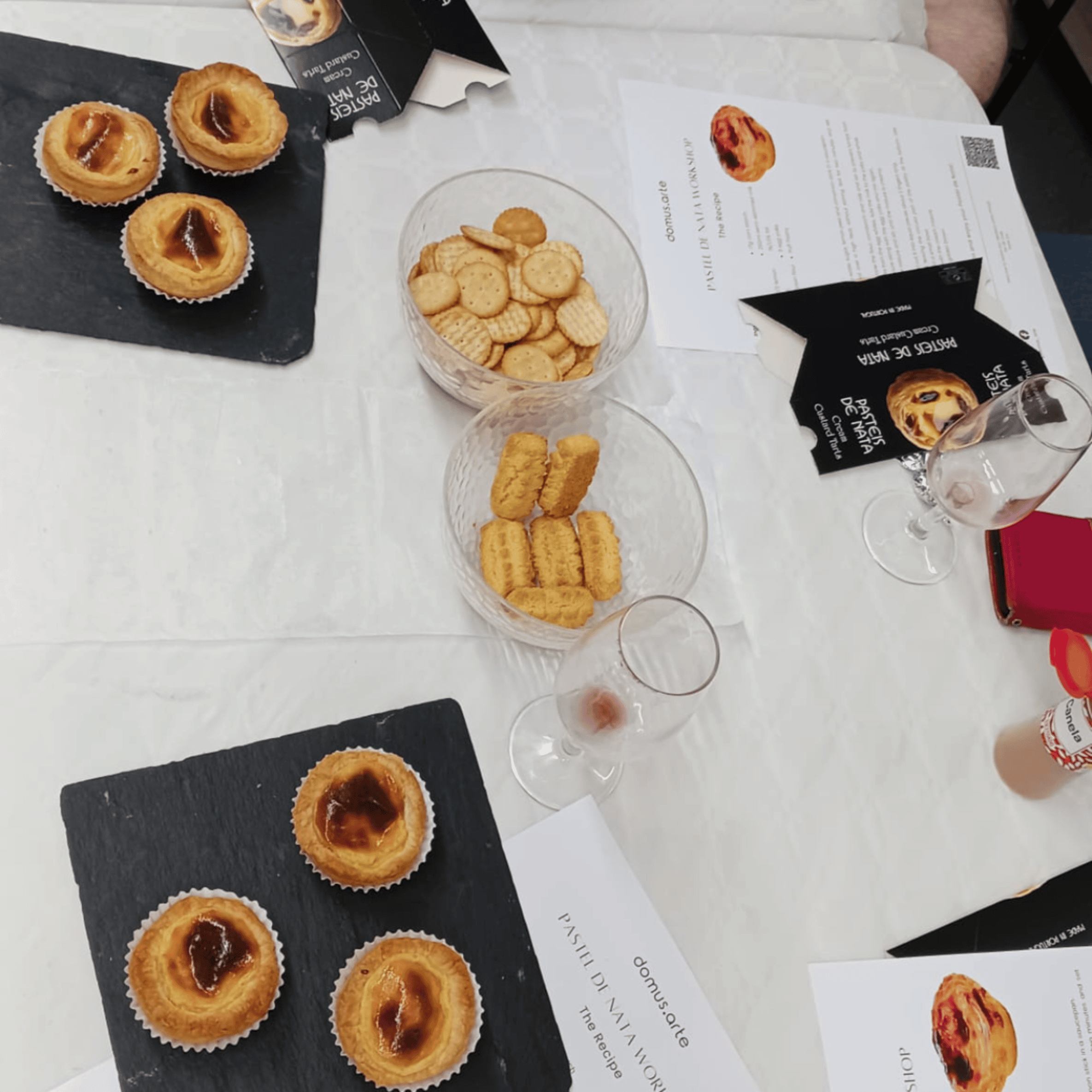
tawny port suits the custard best
Sip a glass of Port while your tarts bake, take the recipe home, and cancel free up to 24 hours before the class.